Cybersecurity: 24/7/365

Cybersecurity: 24/7/365
4MEDNET delivers managed IT, cybersecurity, HIPAA compliance, and AI automation solutions built exclusively for healthcare practices.



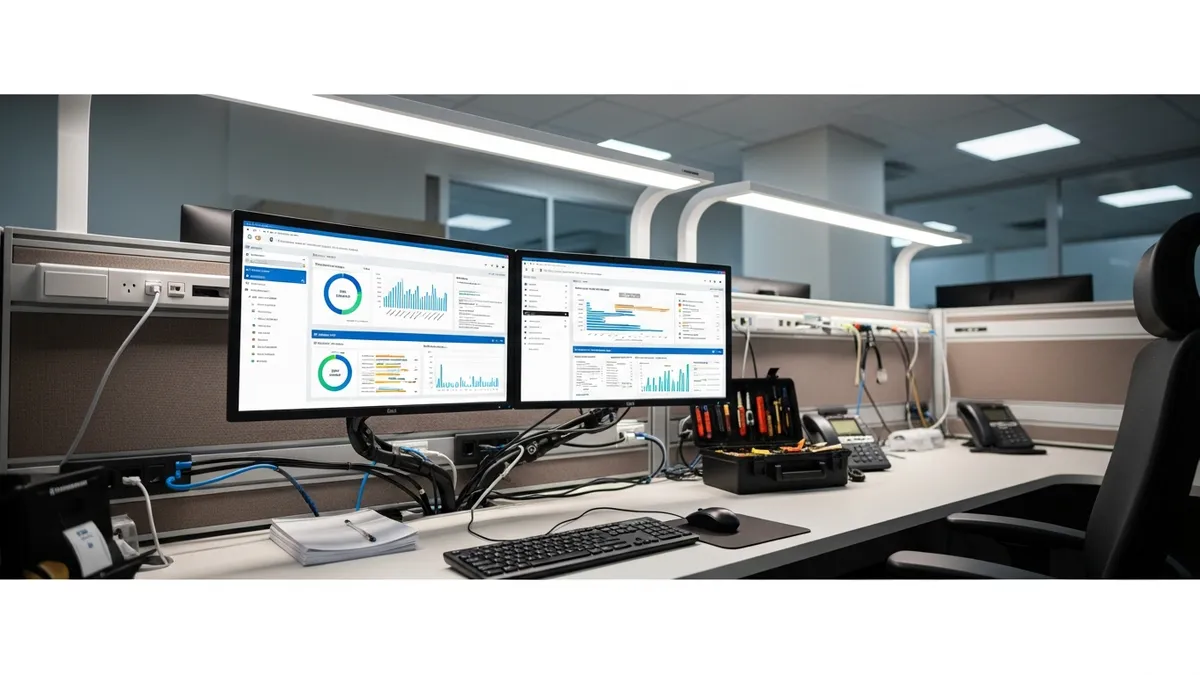
Your medical practice depends on technology for everything — EHR systems, billing software, digital imaging, internet connections, printers, and workstations. The question isn't whether something will stop working. It's what happens when it does.
You have two options for IT support. Each works differently, costs differently, and protects your practice differently. The right choice depends on your size, your risk tolerance, and how much downtime you can afford.
Break-fix is exactly what it sounds like. Something breaks, you call someone to fix it. You pay for that specific repair — by the hour or per incident. There's no ongoing contract, no monthly fee, and no monitoring between calls.
Related: see co-managed IT for practices with in-house staff and the signs your practice has outgrown its IT.
Your IT person only knows about problems when you pick up the phone. Between calls, nobody is watching your network, updating your software, or checking your backups.
Think of it like going to a mechanic only when your car won't start. No oil changes, no inspections, no preventive care. You save money in the months when nothing goes wrong — and you pay heavily in the months when something does.
Managed IT is a subscription model. You pay a flat monthly fee per endpoint or per employee. In return, you get proactive monitoring, regular maintenance, help desk support, security management, backup verification, and compliance support.
Your managed IT provider watches your systems around the clock. They catch problems before you notice them. They patch your software on a schedule, manage your backups, maintain your security tools, and keep documentation current for compliance audits.
This is like having a mechanic who maintains your car on a schedule — oil changes, tire rotations, brake inspections. They catch the worn pads before they fail on the highway. You pay consistently, but you rarely deal with a breakdown.
Break-fix costs swing wildly. A month with no issues costs nothing. A server crash costs $3,000. A ransomware incident costs $50,000. Budgeting is a guessing game.
Managed IT gives you one consistent monthly number. You know exactly what IT will cost this quarter and next quarter. For practices managing tight margins, this predictability matters more than the raw dollar amount.
But the sticker price comparison misses the hidden costs of break-fix:
Here's a number most practice owners don't know: the average healthcare office loses $7,900 for every hour of downtime. That covers lost patient revenue, idle staff wages, rescheduled appointments, and overtime to catch up.
With break-fix, downtime starts when something fails and ends when the repair is done. You have to notice the problem, call your IT person, wait for them to be available, wait for diagnosis, and wait for the fix. If parts need ordering, you might wait days. A four-hour outage under break-fix costs more than an entire year of managed IT for many practices.
Managed IT prevents most downtime from happening at all. Monitoring catches failing hard drives, memory issues, overheating equipment, and software conflicts before they cause outages. Patches and updates run during off-hours — not during your busiest clinic day. When something does fail, your provider already knows your environment and can respond in minutes, not hours.
The difference is the gap between "your server crashed and we're starting diagnosis" versus "we noticed your server's RAID array showing early warning signs and replaced the drive last night."
This is where the break-fix model creates the most risk for medical practices.
A break-fix provider handles security only when you specifically ask them to — and only as much as you ask for. Between calls, nobody is monitoring for threats. Firewall rules get stale. Antivirus definitions expire. Patches fall behind. Phishing emails arrive unopposed.
You might not realize you have a security gap until it's exploited. And the break-fix provider has no way to know either — they're not watching.
Managed IT includes continuous cybersecurity as a core part of the service:
Under break-fix, you'd need to purchase, configure, and manage each of these tools separately — or go without. Most break-fix practices go without.
HIPAA requires ongoing security measures that don't fit the break-fix model. Annual risk assessments, documented policies, workforce training, access controls, audit logging, encrypted backups, and breach response planning — all are mandatory, and all require continuous attention.
Under break-fix, HIPAA compliance falls entirely on you. Your break-fix provider fixes your printer. They don't manage your encryption, document your policies, or prepare you for an HHS audit. You'd need to hire a separate HIPAA consultant, maintain your own documentation, and hope nothing falls through the cracks between visits.
Most managed IT providers for healthcare build compliance into their service from day one:
When HHS comes knocking, a managed IT practice hands over a binder of documentation. A break-fix practice scrambles to reconstruct what they can from memory.
Break-fix providers might set up a backup system if you ask them to. But nobody checks whether it's actually running. Nobody tests whether the data can be restored. Nobody verifies the backup is complete and uncorrupted.
Practices discover their backups don't work at the worst possible moment — during a ransomware attack or a server failure. "We thought we had backups" is one of the most common phrases heard during healthcare disaster recovery.
Managed IT includes verified, monitored backups as standard. Your provider tests recovery regularly, monitors for backup failures, and maintains offsite or cloud copies that ransomware can't reach. When you need a restore, it works — because someone verified it last week.
Adding a new location or hiring more staff under break-fix means calling your IT person for each individual setup. There's no standardized configuration, no security baseline, and no documentation trail. Every new workstation is a one-off project.
Managed IT scales with you. New employees get onboarded with proper access levels, security tools, email, and training from day one. New locations connect to your existing infrastructure with the same security standards as your main office. Your provider already knows your environment and can plan capacity before you outgrow it.
Modern practice management includes tools that break-fix providers don't touch — like AI-powered phone systems that handle appointment scheduling, patient routing, and after-hours calls without adding staff.
An AI receptionist answers every call, schedules appointments directly in your PMS, routes urgent matters to the right provider, and eliminates voicemail entirely. It reduces no-shows with automated confirmations and reschedules cancellations into open slots.
This kind of technology requires integration with your EHR, your phone system, and your network — exactly the kind of cross-system optimization that a managed IT provider handles and a break-fix technician doesn't. Under break-fix, your phone system, your network, and your EHR are three separate problems managed by three separate vendors with no coordination.
Break-fix can work for extremely small setups. If you're a solo practitioner with one computer, a cloud-based EHR, and minimal IT complexity, the math might favor paying per incident.
If your annual IT repair bills stay under $2,000, you handle your own HIPAA compliance, you don't store PHI locally, and you're comfortable with the security risk — break-fix keeps things simple. But this situation is rare and gets rarer as practices add digital imaging, telehealth, and connected devices.
Here's what the numbers look like for a typical 10-person medical practice:
Managed IT costs less over any multi-year period once you account for the downtime, breach risk, and separate compliance costs that break-fix doesn't cover.
See our pricing page for exact numbers, or compare plans side by side.
Moving from break-fix to managed IT doesn't have to be disruptive. A good provider starts with an assessment of your current setup — hardware inventory, software versions, security posture, backup status, and compliance gaps.
The first month focuses on stabilization: patching systems, fixing vulnerabilities, deploying monitoring and security tools, and establishing baselines. After that, things get quieter. That's the whole point. Your phone stops ringing with IT emergencies. Your staff stops losing hours to technology problems. You stop worrying about the next outage.
Want to see what managed IT would look like for your practice? Book a free consultation and we'll review your current setup, estimate costs, and show you exactly what's included — security, compliance, backups, help desk, and everything in between.
Questions first? Reach out to our team. We work exclusively with small medical practices and understand what you're dealing with.
Ready to take the next step? Explore our healthcare IT services, book a free consultation, or compare our plans.


Managed IT, cybersecurity, HIPAA compliance, and AI automation for healthcare practices. We keep your technology secure so you can focus on patient care.

4MEDNET.COM - Copyright 2026. All rights reserved.


