Cybersecurity: 24/7/365

Cybersecurity: 24/7/365
4MEDNET delivers managed IT, cybersecurity, HIPAA compliance, and AI automation solutions built exclusively for healthcare practices.
Pacific Women's Health · Redondo Beach, CA



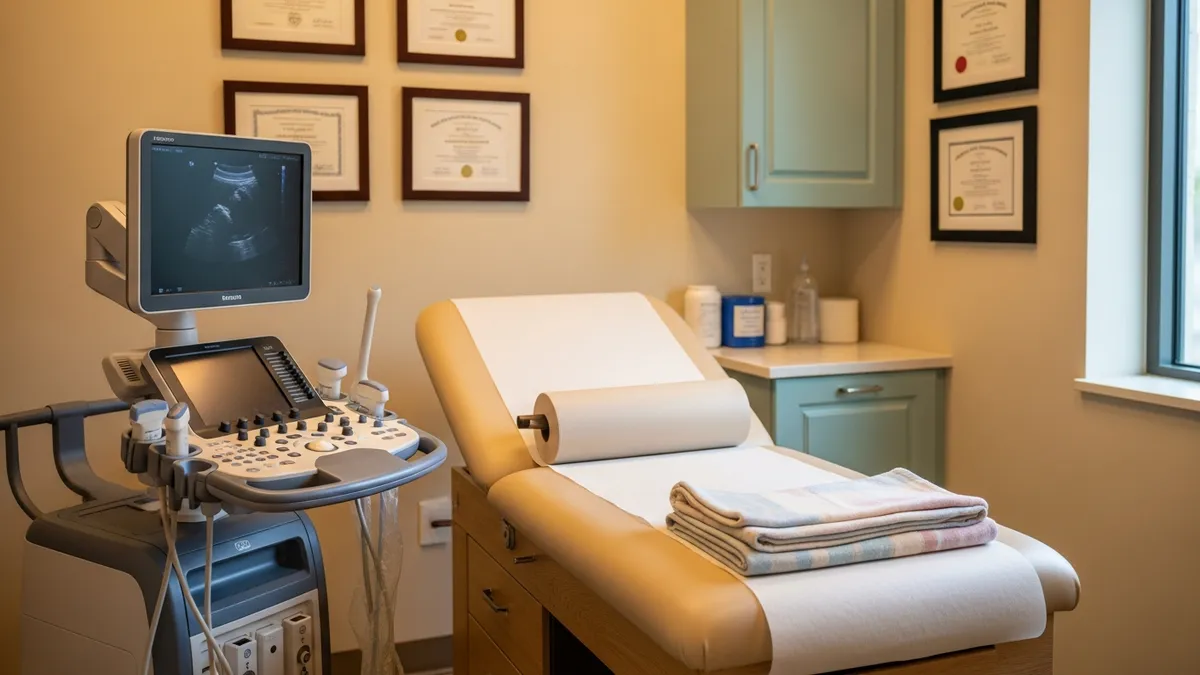
Pacific Women's Health is an OB/GYN practice in Redondo Beach, California, serving women across the South Bay. Three physicians and a certified nurse midwife manage a panel of 4,800 active patients. The practice employs 20 people — OB/GYNs, a midwife, nurses, medical assistants, an ultrasound tech, front desk staff, and a billing coordinator. They provide the full scope of women's health: prenatal care, labor and delivery, annual exams, family planning, menopause management, gynecologic surgery, and fertility consultations.
Dr. Lisa Huang, the founding partner, built the practice around trust. Her patients share information they don't share with anyone else — reproductive histories, pregnancy complications, fertility struggles, contraceptive choices, and intimate health concerns. Protecting that information wasn't just a legal requirement. It was foundational to the patient relationship.
The problem was that none of it was actually protected.
OB/GYN records are among the most sensitive in all of healthcare. They contain reproductive histories, pregnancy test results, ultrasound images, contraceptive choices, STI screenings, fertility treatment details, genetic testing results, and mental health screenings during pregnancy. With reproductive healthcare decisions facing increased legal scrutiny in some jurisdictions, the security of this data carries implications beyond HIPAA — it's a matter of patient safety and trust.
Pacific Women's Health stored all of this on systems with no meaningful protection. The EHR ran on a local server from 2019. Ultrasound images were archived on a separate workstation with an external hard drive — accessible to anyone on the network. Prenatal records, including genetic testing results and high-risk pregnancy documentation, flowed between the practice, the hospital's labor and delivery unit, and external labs through regular, unencrypted email.
The ultrasound tech routinely saved fetal images to a personal USB drive to transfer between the imaging workstation and the EHR — a workaround for a broken network integration that nobody had fixed. That USB drive, containing hundreds of ultrasound images with patient names and dates, traveled in her purse between home and the office every day.
The practice ran on a single server with no redundancy and no cloud failover. The EHR, ultrasound archive, billing system, and lab interface all depended on one machine in a closet. A break-fix technician maintained it for $170 per hour when things broke.
Two months before our engagement, the server experienced a 6-hour outage during a firmware update that went wrong. The practice ran on paper — but an OB practice can't fully function on paper. Ultrasound images were inaccessible. Prenatal lab results couldn't be reviewed. Three patients in their third trimester had their appointments rescheduled because providers couldn't access their pregnancy records to confirm gestational age and risk factors.
Backups ran nightly to a NAS device in the same closet as the server. No offsite replication. No restore testing. If a fire, flood, or ransomware attack destroyed the server room, every record — 12 years of patient histories, ultrasound archives, prenatal records, and surgical documentation — would be permanently lost.
Monthly IT costs swung between $600 and $3,800. The average was $1,900 per month with no monitoring, no security, and no proactive maintenance included.
Pacific Women's Health had never conducted a security risk assessment. The practice had a privacy notice posted in the waiting room and a template HIPAA acknowledgment form that patients signed at intake. That was the entire compliance program.
No written policies existed for data access, email communication, device management, or breach response. No Business Associate Agreements had been signed with any of the practice's 9 vendors who handle PHI — including the hospital's L&D unit, the ultrasound imaging vendor, the lab interface, the billing clearinghouse, and the genetic testing company. Staff had never completed HIPAA training.
For a practice handling reproductive health records, genetic testing results, and pregnancy data, the compliance gap was severe.
An OB/GYN practice has a phone problem that most other specialties don't: genuine urgency at unpredictable hours. Pregnant patients experience contractions, bleeding, reduced fetal movement, water breaking, and preeclampsia symptoms at midnight, on holidays, and during weekends. They need to know whether to go to the hospital, come to the office, or wait until morning.
Pacific Women's Health received 80 to 100 calls per day during business hours. The mix included prenatal appointment scheduling, lab result inquiries, prescription refills, insurance verification, ultrasound scheduling, postpartum check-in questions, and new patient consultations. Three front desk employees managed everything while checking patients in and processing payments.
Hold times averaged 3 minutes during peak morning hours. Voicemails stacked up — 15 to 20 per day. Callbacks took 12 to 24 hours.
After 5 PM and on weekends, calls went to an answering service staffed by operators with no medical training. The operators took a name, number, and a one-line message, then paged the on-call provider. The provider had no context — no patient history, no pregnancy status, no recent visit notes. She had to call the patient back, gather information from scratch, and make a clinical decision based on a phone conversation with no chart access.
The answering service cost $1,800 per month and generated consistent patient complaints. Three patients in the past year had gone to the ER for non-emergency symptoms because they couldn't reach anyone who could help them decide.
We assessed the practice over three days — every device, network path, server, ultrasound archive, lab interface, vendor relationship, compliance document, and phone workflow. The findings: reproductive health data flowing through unprotected systems, a fragile server with no failover, ultrasound images on a USB drive in an employee's purse, zero HIPAA compliance, and an answering service that frustrated patients and providers alike.
We designed a 60-day remediation plan covering HIPAA compliance, cybersecurity, managed IT, and patient communications.
We deployed an AI-powered phone receptionist designed for the unique urgency patterns of an OB/GYN practice. This replaced the $1,800/month answering service entirely.
The full deployment was completed in 60 days. Every plan we offer is published on our pricing page — no hidden quotes.
Pacific Women's Health now has a compliance program built for the specific sensitivity of OB/GYN care. The risk assessment documents every system that handles reproductive health records, ultrasound images, genetic testing results, and pregnancy data. All 9 BAAs are signed. All 20 employees have completed specialized training.
The OB/GYN-specific policies — reproductive health data handling, ultrasound image access controls, genetic result communication protocols, and enhanced privacy provisions — go well beyond template compliance kits. At renewal, Dr. Huang's insurance broker took the new documentation to market and came back with an 11% premium reduction — $4,800 a year — earned on the strength of the encrypted records and access controls.
The unencrypted prenatal records, the USB drive in a purse, the missing vendor agreements — every gap we catalogued on day one has been closed.
Dr. Huang's perspective: "Our patients trust us with information they don't share with anyone else. Knowing that data is now truly protected — not just 'we hope nobody steals the USB drive' protected — changes the entire relationship. I can look a patient in the eye and tell her that her records are safe."
The ultrasound archive migration was the highest-priority security improvement. Thousands of fetal images moved from an external hard drive (accessible to anyone on the network) to an encrypted, role-based cloud archive. Only authorized clinical staff can access imaging. The USB drive that traveled in an employee's purse every day was wiped and retired.
The direct integration between the ultrasound system and EHR eliminated 100% of the manual file transfers that created untracked copies of patient images. Images now flow directly into the patient chart through an encrypted, audited pathway.
In the first 12 months, the security stack blocked 183 malicious emails, detected and quarantined 11 malware attempts, and stopped one targeted phishing attack disguised as a genetic testing lab result notification. Not a single record was exposed.
Phishing simulation results: first test, 20% clicked. By the third quarter, 4%. The fake lab result notification — designed to look like a genetic testing company alerting the practice to abnormal results — was the most effective training scenario.
In 12 months since the cloud migration, the practice has experienced zero unplanned outages. The 6-hour server crash that forced providers to reschedule third-trimester patients? It can't happen again. The cloud environment has automatic failover — if any component fails, the system switches to a backup instance in seconds.
Ultrasound workflow improved dramatically. The direct EHR integration means images appear in the patient chart within seconds of capture. Providers review imaging on any workstation in the office without searching for files on external drives or waiting for network transfers.
Monthly IT costs became predictable. The practice went from an average of $1,900 per month in break-fix charges (with spikes to $3,800) to a flat monthly fee covering cloud hosting, monitoring, security, backups, and help desk. First-year IT savings: $9,600.
The AI receptionist replaced the $1,800/month answering service — saving $21,600 per year while providing dramatically better care.
In 12 months, the system handled over 27,000 inbound calls. Of those, 60% were fully resolved by the AI — appointments booked, lab result status provided, prescription refills routed, ultrasound scheduling confirmed, insurance questions answered.
The pregnancy urgency triage proved its value repeatedly. In the first year, the AI escalated 42 after-hours calls to the on-call provider for genuine clinical concerns — contractions, bleeding, reduced fetal movement, and preeclampsia symptoms. Each call included the patient's gestational age, symptom details, and relevant history pulled from the scheduling system. The on-call provider had context before picking up the phone — instead of calling back blind.
Five of those 42 escalated calls resulted in patients being directed to L&D for immediate evaluation. Two resulted in emergency deliveries. In both cases, the patients told Dr. Huang they might have waited until morning if they'd reached the old answering service, because the operators couldn't help them understand the urgency.
Non-urgent after-hours calls — appointment scheduling, insurance questions, medication refill requests, general pregnancy questions — are handled by the AI without paging the provider. On-call providers went from receiving 8 to 10 answering service pages per night (most non-urgent) to 1 to 2 AI-escalated calls per night (all clinically appropriate). Provider satisfaction with after-hours coverage went from "terrible" to "life-changing," in Dr. Huang's words.
After-hours appointment bookings accounted for 17% of all new patient appointments — women who researched OB/GYN practices in the evening and called to book. At an average new OB patient lifetime value of $8,000 to $15,000 (prenatal care through delivery), those recovered bookings represent substantial long-term revenue.
Front desk phone time is down from 2.5 hours a day to under 40 minutes, and the practice reinvested the 50-plus monthly hours it got back in check-in, insurance pre-authorization, and prenatal care coordination.
Running an OB/GYN practice with sensitive records on unprotected systems and expectant mothers reaching voicemail after hours? Book a free consultation and we'll assess your data security, compliance, IT infrastructure, and patient communication.
“When a patient at 34 weeks calls at midnight about reduced fetal movement, the on-call physician now picks up already knowing her gestational age and history. Two of those calls became emergency deliveries this year. I cannot overstate what that context means in obstetrics.”
Dr. Lisa Huang, MD — Pacific Women's Health
HIPAA Audit Findings
Answering Service Saved
Urgent After-Hours Escalations
Calls Handled by AI
OB/GYN records contain reproductive histories, contraceptive choices, pregnancy data, STI results, fertility treatments, and genetic testing — among the most sensitive categories of health information. Reproductive health data faces increased legal scrutiny in certain jurisdictions. Breaches of this data can have consequences far beyond financial — they can affect patients' personal safety, insurance coverage, and employment. Our security program for OB/GYN practices includes enhanced access controls, encrypted communications, and heightened monitoring.
Yes — it's configured with OB-specific triage protocols. The AI identifies concerning symptoms (bleeding, premature contractions, reduced fetal movement, severe headache, fluid leaking) and immediately routes those calls to the on-call provider with symptom details and gestational age. It does not provide clinical advice for urgent situations — it ensures the patient reaches a provider within minutes instead of leaving a message with an untrained answering service operator.
We migrate imaging archives to encrypted, HIPAA-compliant cloud storage with role-based access controls. Only authorized clinical staff can view images. We establish direct integrations between ultrasound systems and the EHR to eliminate manual file transfers. Genetic testing results are received and communicated through encrypted channels. Every access is logged for audit purposes.
Completely. The AI provides 24/7 coverage that's better than an answering service at a lower cost. It answers routine questions, books appointments, routes prescriptions, and handles insurance inquiries without paging the provider. For genuine clinical urgency, it escalates with full context — symptom details, gestational age, and relevant history — so the provider can make informed decisions immediately. Practices typically save $15,000 to $25,000 per year while dramatically improving after-hours patient experience.


Managed IT, cybersecurity, HIPAA compliance, and AI automation for healthcare practices. We keep your technology secure so you can focus on patient care.

4MEDNET.COM - Copyright 2026. All rights reserved.