Cybersecurity: 24/7/365

Cybersecurity: 24/7/365
4MEDNET delivers managed IT, cybersecurity, HIPAA compliance, and AI automation solutions built exclusively for healthcare practices.
Summit Orthopedics & Sports Medicine · Burbank, CA



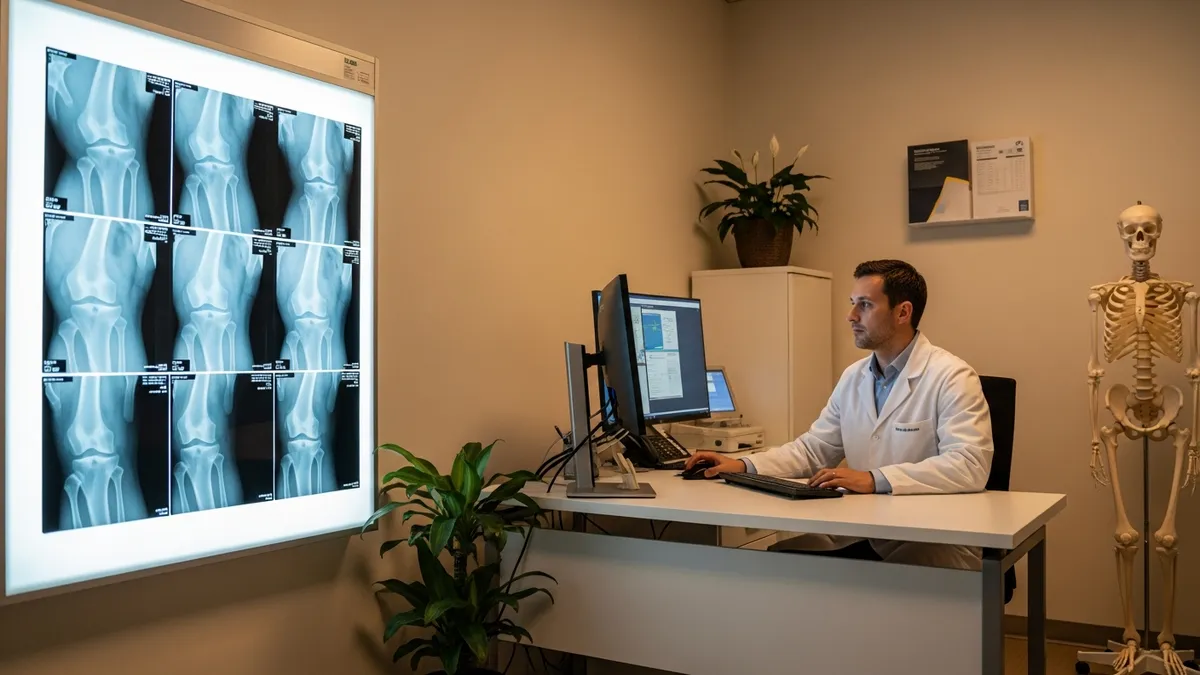
Summit Orthopedics & Sports Medicine runs two facilities in Burbank, California — a main clinic where surgeons see patients, read imaging, and plan procedures, and a physical therapy center three miles away where patients complete post-surgical rehabilitation. Between both sites, the practice employs 35 people: orthopedic surgeons, a sports medicine physician, physical therapists, athletic trainers, medical assistants, surgical schedulers, front desk staff, and a billing team.
The practice handles everything from ACL reconstructions and rotator cuff repairs to sports physicals and chronic joint pain. They perform 12 to 15 surgeries per week at a nearby ambulatory surgical center and manage 60 to 70 PT visits per day at the rehab facility. It's a high-volume, high-stakes operation where imaging and surgical scheduling are the backbone of revenue.
Summit's PACS (Picture Archiving and Communication System) — the system that stores and displays X-rays, MRIs, and CT scans — ran on a dedicated server at the main clinic that was six years old. The PACS server held over 180,000 imaging studies accumulated since the practice opened. It was the single most critical system in the building.
The server had started showing signs of strain. Image load times had increased from 2 seconds to 8 to 12 seconds over the past year. During peak hours — when three surgeons were reviewing pre-op imaging simultaneously — the system crawled. Twice in the past six months, the PACS had gone completely unresponsive for 45 to 60 minutes, forcing surgeons to delay surgical planning and sending three patients home to be rescheduled.
The PACS server had no redundancy. If the hardware failed, 180,000 imaging studies would be inaccessible until the server was repaired or replaced — a process that could take days. There was no cloud failover. The backup was a tape system that an IT consultant had set up years ago and that nobody had verified since.
Each surgical delay cost the practice an average of $3,800 in rescheduled procedures, wasted OR time, and insurance pre-authorization resets. The PT center couldn't access imaging from the main clinic without requesting a CD burn and sending a staff member to pick it up — a workflow from the 1990s that added 30 to 45 minutes to the first PT session for every post-surgical patient.
Scheduling a surgery at Summit involved a chain of 8 to 10 manual steps: surgeon decides on procedure, scheduler calls the ASC to find OR availability, scheduler calls the patient to confirm the date, scheduler faxes the pre-authorization request to insurance, insurance responds (days later), scheduler calls the patient again to confirm, scheduler sends pre-op instructions, and then someone has to confirm the patient completed their pre-op physical and labs. Any break in the chain meant delays.
Three surgical schedulers managed this process for 12 to 15 surgeries per week. They spent most of their day on the phone — calling the ASC, calling insurance companies, calling patients, and following up on faxes. When a patient cancelled or insurance denied a pre-auth, the cascade of rescheduling calls started over. The schedulers estimated they lost 3 to 5 surgical slots per month to scheduling gaps — procedures that fell through the cracks during the manual coordination process.
At an average surgical revenue of $6,200 per procedure, 4 lost surgeries per month meant $24,800 per month — nearly $300,000 per year — in revenue that disappeared into scheduling chaos.
Neither facility had meaningful cybersecurity. The main clinic ran Windows Defender on workstations and had a mid-range firewall from 2020. The PT center had a consumer router and no endpoint protection at all. Both facilities connected through a basic VPN that dropped regularly — usually during the image transfer attempts that required the most bandwidth.
Staff at the PT center shared a single login for the practice management system. Surgical records — operative reports, imaging, anesthesia notes — flowed between the main clinic, the ASC, and the PT center with minimal access controls. The pre-auth faxes sent to insurance companies contained patient SSNs, diagnosis codes, and detailed surgical plans on an unencrypted fax line.
Workers' compensation cases — roughly 30% of Summit's surgical volume — required detailed documentation and imaging that was frequently requested by employers, insurance adjusters, and attorneys. These requests came by email. Staff responded by attaching records to regular, unencrypted email messages.
Summit had no security risk assessment. No written policies. No Business Associate Agreements with the ASC, the imaging vendor, the cloud PACS integration, the billing clearinghouse, the workers' comp case management platform, or any of their other vendors. No staff training. No breach response plan.
Surgical records carry some of the highest sensitivity in healthcare — operative reports, anesthesia records, pathology results, and pre-surgical medical clearances. Combined with the workers' comp documentation flowing through unencrypted channels, Summit's compliance exposure was severe.
Summit received 100 to 120 calls per day between both facilities. The call mix was unusually complex: surgical scheduling questions, pre-op and post-op instructions, PT appointment scheduling, workers' comp case inquiries, imaging requests, referral coordination, insurance pre-authorization status, and urgent post-surgical concerns.
Three front desk employees at the main clinic and two at the PT center managed all of it. Hold times averaged 3 minutes. Voicemails stacked up — 20+ per day. Callbacks took 24 to 48 hours. Post-surgical patients calling with urgent concerns about swelling, pain, or wound issues often couldn't get through to clinical staff quickly enough and ended up in the ER — an outcome that was bad for the patient, expensive for the system, and damaging to the practice's reputation.
After hours and on weekends, everything went to voicemail. Post-surgical patients — who have the highest urgency and anxiety — had no way to reach the practice outside business hours.
We assessed both facilities over five days — every server, workstation, imaging system, network path, surgical scheduling workflow, vendor relationship, and compliance document. The findings: a PACS server approaching failure with 180,000 irreplaceable studies, zero cybersecurity at the PT center, shared logins, surgical records flowing through unencrypted fax and email, no HIPAA documentation, and a phone system that couldn't handle the complexity of a surgical practice.
We designed a 75-day plan covering managed IT, cybersecurity, HIPAA compliance, and front office operations across both facilities.
We deployed an AI-powered phone receptionist across both facilities, configured for the unique complexity of an orthopedic and PT practice.
The full deployment was completed in 75 days across both facilities. The numbers behind an engagement like this live on our pricing page.
The cloud-hybrid PACS migration eliminated the performance issues that had plagued the practice. Image load times dropped from 8-12 seconds to under 2 seconds, even during peak surgical planning hours when three surgeons review imaging simultaneously. The PACS hasn't had a single unresponsive episode in 12 months — compared to two outages in the six months before our engagement.
The SD-WAN connection between facilities transformed the PT workflow. Physical therapists access surgical imaging, operative reports, and surgeon instructions in real time. The first-session delay for post-surgical patients dropped from 30-45 minutes to zero. Patients start their rehabilitation immediately instead of waiting for someone to burn a CD and drive it over.
The surgical scheduling gaps that cost the practice 3 to 5 procedures per month dropped to near zero. With reliable systems, faster imaging, and fewer manual handoffs, the schedulers stopped losing surgeries to coordination breakdowns. Over 12 months, the practice recovered approximately $90,000 in revenue from procedures that would have fallen through the scheduling cracks. That $90,000 is a deliberately conservative first-year number — it counts only procedures the schedulers could tie directly to the new workflow, and the monthly run rate was still improving at year end.
Monthly IT costs became predictable. The practice went from $3,800 per month average in break-fix charges (with spikes to $6,500 during imaging emergencies) to a flat monthly fee covering both facilities. First-year IT savings: $19,600.
In the first 12 months, the security stack blocked 418 malicious emails across both facilities, detected and quarantined 31 malware attempts, and stopped two targeted phishing attacks aimed at the workers' comp documentation workflow — emails disguised as insurance adjuster requests for patient records. Every attempt was contained before it reached a surgical record or an imaging study.
The elimination of shared logins at the PT center means every record access is tracked to an individual. Workers' comp documentation now flows through encrypted channels with audit trails — a requirement that multiple insurance carriers had been pushing for.
Phishing simulation results: first test, 24% clicked. By the fourth quarter, 6%. The fake surgical supply order confirmation was the most effective scenario — it caught the office manager and two surgical schedulers in round one.
Summit now has a compliance program built for the complexity of a surgical practice. The risk assessment documents every imaging workflow, every cross-facility data transfer, every workers' comp documentation channel, and every vendor relationship. All 11 BAAs are signed. All 35 employees have completed role-specific training.
When an adjuster or attorney requests surgical records now, staff send them through the encrypted exchange in minutes — and every disclosure leaves an audit entry.
The AI receptionist handled over 36,000 calls across both facilities in the first 12 months. Of those, 55% were fully resolved by the AI — PT appointments booked, pre/post-op questions answered, insurance status provided, and workers' comp inquiries routed.
The post-surgical call handling was the most impactful improvement for patient experience. Patients calling with routine recovery questions — "Can I shower yet?" "When can I drive?" "Is this amount of swelling normal?" — get immediate, accurate answers based on their specific procedure and surgeon's protocols. Before the AI, these calls went to voicemail and waited 24+ hours for a callback. Now they're answered instantly.
Urgent post-surgical calls — excessive pain, fever, wound concerns — are identified by the AI within the first 30 seconds and routed immediately to clinical staff with symptom details. Three patients in the first year were escalated to the on-call surgeon after hours for genuine post-op complications that required intervention. All three were seen the same evening. Under the old voicemail system, those patients would have gone to the ER.
Front desk staff across both facilities went from spending a combined 3.5 hours per day on phones to under an hour. PT reception staff stopped interrupting therapy sessions to answer scheduling calls. The front desk at the main clinic stopped putting post-surgical patients on hold to answer routine scheduling inquiries.
Dr. Michael Torres, the founding partner, summed up the transformation: "Our PACS was failing, our surgical schedule leaked revenue every month, our patient records were unprotected, and post-op patients couldn't reach us after hours. We fixed all of it in 75 days. The imaging alone was worth it — but the fact that a post-surgical patient can call at 10 PM and get an answer instead of a voicemail? That's the part that changed how I feel about our practice."
Running an orthopedic or surgical practice with aging imaging systems and post-op patients reaching voicemail? Book a free consultation and we'll assess your imaging infrastructure, security, compliance, and patient communication.
“Three post-op patients reached us after hours with genuine complications this year, and every one of them was seen the same evening instead of landing in an ER. Pulling up an MRI used to take ten seconds on a good day. Now it's under two. In a surgical practice, those are the numbers that matter.”
Dr. Michael Torres, MD — Summit Orthopedics & Sports Medicine
Revenue Recovered
Imaging Load Time
Threats Blocked (12 mo)
Calls Handled by AI
Yes — we've migrated PACS systems with 100,000+ studies without data loss. We run the old and new systems in parallel during migration so providers have continuous access to imaging throughout the process. The cloud-hybrid architecture keeps frequently accessed studies cached locally for speed while storing the full archive in the cloud with redundant backups.
The AI is configured with procedure-specific recovery protocols from your surgeons. It answers routine recovery questions — activity restrictions, wound care, medication schedules, expected symptoms — based on the patient's specific surgery. For concerning symptoms like fever, excessive swelling, or wound drainage, it escalates immediately to clinical staff with a symptom summary. It doesn't replace clinical judgment — it handles the routine questions so your nurses can focus on the urgent ones.
Yes. We set up encrypted document exchange channels for workers' comp records, configure access controls so only authorized staff can view comp case files, and maintain the audit trails that insurance carriers and attorneys require. All documentation flows through HIPAA-compliant channels with delivery tracking.
We use encrypted SD-WAN tunnels that provide a high-bandwidth, reliable connection between facilities. PT staff access surgical imaging, operative reports, and treatment plans in real time — no CD burns, no faxes, no driving between offices. The connection is monitored 24/7 and is far more reliable and faster than a standard VPN.

Managed IT, cybersecurity, HIPAA compliance, and AI automation for healthcare practices. We keep your technology secure so you can focus on patient care.

4MEDNET.COM - Copyright 2026. All rights reserved.


