Cybersecurity: 24/7/365

Cybersecurity: 24/7/365
4MEDNET delivers managed IT, cybersecurity, HIPAA compliance, and AI automation solutions built exclusively for healthcare practices.
Valley Family Medical Group · Glendale, CA



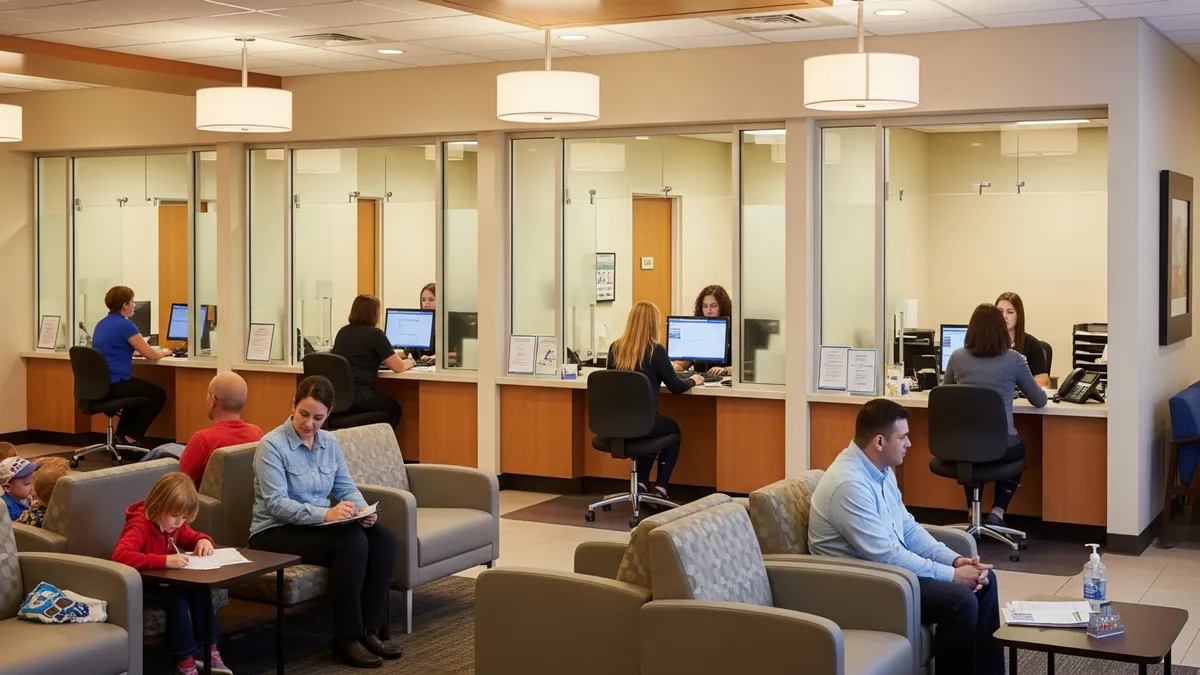
Valley Family Medical Group is one of the busiest primary care practices in the San Fernando Valley. Five physicians and two nurse practitioners see 120 to 150 patients per day across a single large location in Glendale. The practice employs 32 people — providers, nurses, medical assistants, front desk staff, a billing team, a referral coordinator, and an office manager. They handle the full spectrum of family medicine: wellness exams, chronic disease management, pediatric care, women's health, minor procedures, and urgent sick visits.
With 8,200 active patients and a panel that grew 15% in the past two years, the practice was operating at capacity. Revenue was strong. Patient loyalty was high. But the systems supporting the operation hadn't scaled with the growth — and the cracks were showing everywhere.
The practice ran on two on-premise servers installed in 2018 — one for the EHR, one for billing and file storage. With 28 workstations, a lab interface, an imaging system, and a vaccine refrigerator monitoring system all running through the same network, the servers were maxed out. The EHR loaded slowly during peak hours. Chart searches that should take two seconds took eight. Lab results sometimes took 30 minutes to populate after the interface received them.
Providers complained daily. A two-second delay on every chart load, multiplied across 150 patient visits, added over an hour of wasted time per day across the practice. Nurses waiting for lab results to display couldn't prep patients for their appointments. The billing team fell behind because claims processing slowed to a crawl every afternoon when the servers were under heaviest load.
The break-fix IT vendor had been with the practice since opening. He maintained the servers and showed up when things broke — which was increasingly often. Monthly IT costs averaged $4,100 but spiked to $7,200 during bad months. When the EHR server crashed for 4 hours on a Wednesday morning, 38 patients had to be rescheduled. The estimated revenue loss: $11,400 in one day.
Backups ran nightly to an external NAS device in the server room. Nobody had tested a restore in over two years. The NAS was connected to the same network as everything else — if ransomware hit the servers, it would encrypt the backups too.
With 8,200 patients and 7 providers generating notes, lab orders, referrals, prescriptions, and insurance claims every day, the volume of PHI moving through the practice was enormous. And almost none of it was protected.
The practice had no endpoint detection on any workstation. The firewall was a mid-range device from 2019 with firmware that hadn't been updated in 18 months. Staff shared three common EHR logins — "provider," "nurse," and "frontdesk" — because individual accounts "took too long to set up" for new hires. There was no way to audit who accessed which patient record.
The referral coordinator sent patient records to specialists via regular email — diagnosis codes, insurance details, medical histories, and imaging reports. No encryption. No tracking. Over 200 referral packets per month went out through unprotected email. The billing team used a shared spreadsheet on Google Sheets to track denied claims — a spreadsheet containing patient names, dates of birth, diagnosis codes, and insurance IDs accessible to anyone with the link.
Two nurses used a personal WhatsApp group to coordinate patient flow during busy shifts. Messages included patient names, room numbers, and clinical notes like "Room 4 — elevated BP, Dr. Reyes wants labs before discharge." Every one of those messages was PHI on an unencrypted, unmanaged platform.
The practice had a HIPAA compliance binder assembled by the office manager three years ago using a template kit purchased online. It contained generic policies that named the wrong practice, referenced software the practice didn't use, and had never been reviewed by anyone with compliance expertise.
No security risk assessment had been conducted — ever. No Business Associate Agreements existed with any of their 12 vendors who handle PHI. No staff member had completed documented HIPAA training. The breach response plan was a single page that said "Contact the Privacy Officer" without naming who that was.
For a practice handling 8,200 active patient records, generating hundreds of referrals and claims per month, and operating with shared logins and unencrypted email, the compliance exposure was massive. Our assessment put the total penalty exposure above $350,000.
Valley Family Medical received 150 to 180 phone calls per day. Patients called for appointment scheduling, prescription refills, lab results, referral status, billing questions, sick visit requests, vaccine availability, and general medical questions. Four front desk employees managed the phones while simultaneously checking in the 120+ patients who walked through the door each day.
The result was chaos. Average hold time during peak hours: 4 minutes. Daily abandoned calls: 25 to 30. Voicemails per day: 30 to 35. Callback time: 24 to 48 hours. Prescription refill requests took an average of 3 calls to resolve — patient calls front desk, front desk messages nurse, nurse messages provider, provider approves, nurse calls pharmacy, front desk calls patient back.
After 5 PM and on weekends, every call went to voicemail. For a family medicine practice that manages chronic conditions — diabetes, hypertension, asthma, heart disease — after-hours calls often involve medication questions, symptom concerns, and decisions about whether to go to the ER. Those patients got a recording.
The office manager estimated that staff spent a combined 120+ hours per month on phone-related tasks — calls, voicemails, callbacks, message relay, and playing phone tag with patients who didn't answer when called back.
We spent four days assessing the practice — every server, workstation, network path, software system, vendor relationship, data workflow, compliance document, and front desk operation. The findings: two overloaded servers approaching failure, 28 unprotected workstations, shared logins with no audit trail, PHI flowing through unencrypted channels, zero real HIPAA compliance, and a phone system drowning the staff.
We designed a 60-day plan that addressed everything simultaneously. For a practice this size, the problems were deeply interconnected — upgrading the servers without securing the endpoints would leave the new infrastructure exposed. Building compliance documentation while staff still used WhatsApp for clinical coordination would be theater.
We deployed an AI-powered phone receptionist designed to handle the massive call volume of a multi-provider primary care practice.
The full deployment was completed in 60 days. Compare plan tiers on our pricing page to see where a five-provider practice lands.
The cloud migration changed daily life for every provider and staff member. EHR chart load times dropped from 8 seconds to under 1 second. Lab results that used to take 30 minutes to populate now appear within seconds. The billing team's afternoon slowdowns — caused by server overload during peak hours — disappeared entirely.
Providers recovered over an hour per day of cumulative wait time across chart loads, lab lookups, and system transitions. For a 5-provider practice seeing 150 patients daily, that translates directly into patients seen, notes completed on time, and providers going home on schedule instead of charting until 8 PM.
In 12 months, the practice experienced zero unplanned outages. The Wednesday morning EHR crash that cost $11,400 in rescheduled patients? It can't happen again — the cloud environment has automatic failover across multiple data centers.
Monthly IT costs became flat and predictable. The practice went from $4,100 to $7,200 per month in break-fix charges to a single monthly fee that includes everything. First-year IT savings: $22,800.
In the first 12 months, the security stack blocked 524 malicious emails, detected and quarantined 34 malware attempts, and stopped three credential-stuffing attacks against the patient portal. None succeeded, and no patient record was touched.
The impact of eliminating shared logins was immediate and measurable. For the first time, the practice can see exactly who accessed which patient record and when. When a medical assistant left the practice four months after deployment, her individual account was disabled within the hour. Under the old system, she would have retained access indefinitely because everyone shared the same three passwords.
The WhatsApp group is gone. Nurses coordinate through encrypted, HIPAA-compliant messaging. The referral coordinator sends patient records through encrypted email with delivery tracking. The denied claims spreadsheet on Google Sheets has been replaced with secure, in-system tracking.
Phishing simulation results: first test, 29% clicked. By the fourth quarter, 5%. The fake lab result notification was the most effective training exercise — it caught 8 employees in round one and zero in round four.
Valley Family Medical now has a compliance program that matches the scale of its operations. The risk assessment documents every data flow across the 32-employee, 150-patient-per-day operation. All 12 BAAs are signed. All 32 employees have completed role-specific training.
The generic template binder that named the wrong practice has been replaced with 22 custom policies covering every workflow — from how referrals are sent to how prescription refills are communicated to how nurses coordinate patient flow.
The AI receptionist transformed how Valley handles its 150 to 180 daily calls. In 12 months, the system handled over 52,000 inbound calls. Of those, 64% were fully resolved by the AI — appointments booked, prescription refills routed, lab result status provided, referral updates delivered, insurance confirmed.
The prescription refill workflow saw the biggest improvement. What used to take 3 calls and 24 hours now takes one call and 2 hours. The patient calls, the AI collects the information, the request goes directly to the clinical queue, and the patient gets a text when the pharmacy has it ready. Refill-related calls dropped from 40 per day to 8 — because the process works on the first attempt.
After-hours coverage captured 21% of all new appointment bookings. Patients who called at 7 PM with a sore throat, at 6 AM about a child's fever, or on Saturday about a chronic condition flare-up booked next-day visits instead of going to urgent care or the ER. At an average visit value of $195, those recovered appointments represent over $9,000 per month in revenue that previously walked out the door.
The combined 120+ hours per month that staff once sank into phones, voicemails, callbacks, and message relay shrank to under 40 — an 80-hour monthly dividend spent on patient check-in, insurance verification, and the waiting room bottleneck that had grown along with the panel.
Abandoned calls dropped from 25-30 per day to under 4. Average hold time during business hours dropped from 4 minutes to zero. Voicemails per day dropped from 30-35 to under 5.
Running a high-volume primary care practice with overwhelmed phones and aging infrastructure? Book a free consultation and we'll assess your IT, security, compliance, and front office operations.
“Refills used to take three calls and a day of phone tag. Now the AI takes the request, it drops into the nurses' queue, and the patient gets a text when the pharmacy has it. Multiply that across 180 calls a day and you'll understand why my front desk stopped dreading the phone.”
Rebecca Tran, Office Manager — Valley Family Medical Group
Staff Hours Recovered
First-Year IT Savings
Threats Blocked (12 mo)
Calls Handled by AI
Yes — high-volume practices are where our infrastructure makes the biggest difference. We size the cloud environment for peak load, not average load. Your EHR runs fast at 8 AM and at 3 PM. The AI receptionist handles 150+ daily calls without hold times. And our monitoring catches performance issues before they affect patient flow.
The AI collects the medication name, dosage, pharmacy, and patient details through a natural phone conversation. It routes the request directly to your clinical team's task queue — no front desk relay needed. The patient receives a text confirmation when the refill is sent to the pharmacy. What used to take 3 calls and 24 hours now takes one call and a couple of hours.
The AI checks whether results are available in the system. For normal results, it can deliver them per your providers' pre-set instructions — for example, telling a patient their cholesterol panel was normal and they should continue current medications. Abnormal results are never delivered by AI. They're flagged for clinical staff callback with the patient's preferred contact time.
We set up individual accounts for every employee in advance, pre-configure multi-factor authentication, and run parallel access for one week so staff can learn the new login while the old shared accounts still work. On cutover day, the shared accounts are disabled. Most practices tell us the transition took less than a day to feel normal. The security benefit is immediate — every chart access is now tracked to an individual.

Managed IT, cybersecurity, HIPAA compliance, and AI automation for healthcare practices. We keep your technology secure so you can focus on patient care.

4MEDNET.COM - Copyright 2026. All rights reserved.


