Cybersecurity: 24/7/365

Cybersecurity: 24/7/365
4MEDNET delivers managed IT, cybersecurity, HIPAA compliance, and AI automation solutions built exclusively for healthcare practices.
Bright Futures Pediatrics · Woodland Hills, CA



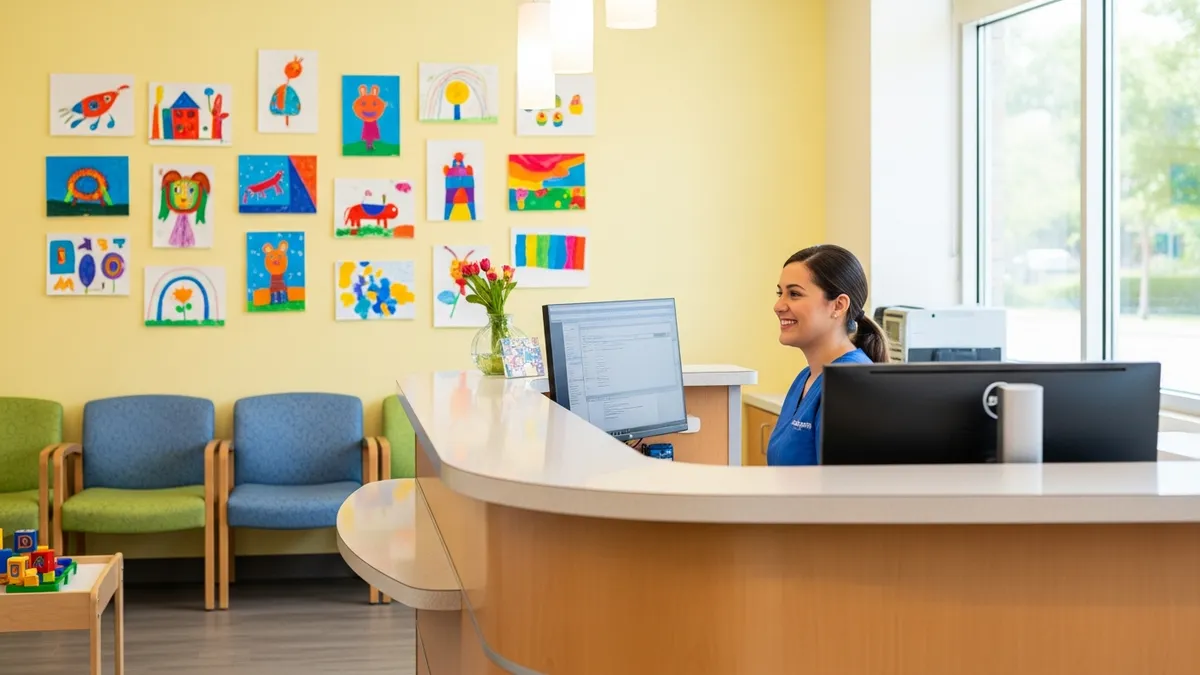
Bright Futures Pediatrics had been serving families in Woodland Hills for seven years. The practice saw 45 to 55 patients per day — well-child visits, vaccinations, sick visits, developmental screenings, and adolescent care. Dr. Anita Sharma and her partner employed 19 people: pediatricians, a nurse practitioner, nurses, medical assistants, front desk staff, and a billing coordinator.
The practice was full. The waiting room was busy. The reputation was strong. But the infrastructure holding it together was falling apart — and the problems went deeper than anyone realized.
Over seven years, every IT decision had been made in a hurry when something broke. The practice ran on an aging Dell server from 2017, tucked into a utility closet with no ventilation. A break-fix vendor charged $185 per hour and showed up when he could — sometimes same day, sometimes Thursday. There was no monitoring, no scheduled maintenance, and no proactive management of anything.
The 19 workstations across the practice were a mix of practice-owned and personal devices. Some ran Windows 10 with current patches. Others hadn't been updated in months. Three nurses used personal laptops that connected to the practice Wi-Fi and accessed the EHR — devices the practice didn't own, couldn't manage, and couldn't wipe if an employee left.
Monthly IT costs were unpredictable. Some months the practice spent $800. Others — when the server acted up, a workstation died, or the printer stopped talking to the EHR — they spent $4,500. The 12-month average was $3,200 per month, or $38,400 per year. That bought zero proactive maintenance, zero security monitoring, and a vendor who answered the phone about half the time.
The breaking point came on a Friday afternoon at 3 PM. The server crashed. The EHR went dark. Vaccination records, growth charts, medication lists — all inaccessible. The break-fix vendor couldn't come until Monday. The practice ran on paper charts for two and a half days. Three insurance claims were filed past the deadline, costing $2,100 in denied reimbursements. Two parents who arrived for well-child visits left without being seen because the nurses couldn't verify immunization histories.
Pediatric records carry special weight. They contain growth trajectories, developmental milestones, vaccination histories, behavioral assessments, and family health information that follows a child for decades. A breach of children's health data doesn't just trigger fines — it creates lasting identity theft risk for minors who won't discover the damage until they're adults applying for credit or insurance.
Bright Futures had no endpoint protection beyond Windows Defender. The practice Wi-Fi used a consumer router with a password that hadn't changed since the practice opened — and was printed on a card at the front desk for patient Wi-Fi access. The same network carried EHR traffic, payment processing, and guest devices.
The billing coordinator used a personal Gmail account to send patient insurance information and claim details to the billing clearinghouse. No encryption. No audit trail. Staff shared a single EHR login — "brightfutures" with a common password — because "it's faster than everyone logging in separately." There was no way to track who accessed which patient record or when.
The backup system was a USB external drive connected to the server. An employee was supposed to swap it weekly and take the old one offsite. In practice, the same drive had been plugged in for four months. Nobody had tested whether the backups actually worked. If the server had been encrypted by ransomware or destroyed by fire, seven years of patient records would have been gone.
Bright Futures had never conducted a security risk assessment. There were no written HIPAA policies or procedures. No signed Business Associate Agreements with any of their vendors — not the EHR company, not the billing clearinghouse, not the vaccine registry, not the lab integration service, not the shredding company. No documented staff training. No breach response plan.
The practice had a HIPAA privacy notice posted in the waiting room. That was the full extent of their compliance program. With children's records flowing through unprotected systems, unmanaged personal devices, shared logins, and unencrypted email, the exposure was severe.
Pediatric practices live and die by the phone. Parents call when their child spikes a fever at midnight. They call to ask about vaccine side effects at 6 AM. They call to schedule sick visits, request school forms, check on lab results, ask about medication dosages, and confirm appointment times. Bright Futures received 70 to 90 phone calls per day.
Two front desk employees managed the phones while checking patients in, collecting copays, scanning insurance cards, and handling the constant stream of parents and children in the waiting room. During flu season and back-to-school months, call volume spiked to 120+ per day. Calls stacked up. Hold times hit three minutes. Voicemails accumulated — 20 to 25 per day — and callbacks happened 12 to 24 hours later.
After 5 PM and on weekends, every call went to a generic voicemail. For a pediatric practice, after-hours calls are often the most urgent — a parent with a sick child at 9 PM trying to decide between waiting until morning, going to urgent care, or heading to the ER. Those parents got a recording. Many drove to the ER for conditions that could have been managed with a next-morning sick visit — or called a competing practice that had a nurse line.
Dr. Sharma estimated that 10 to 15 calls per day went unanswered or abandoned. For a practice where a new patient relationship averages 8 to 10 years of well-child visits, losing even a few families per month had a compounding revenue impact.
We conducted a full assessment over three days — every device, every network path, every server, every vendor, every backup, every compliance document, and every front desk workflow. The findings: 22 critical vulnerabilities, zero HIPAA documentation, a server one bad day away from total data loss, children's health records flowing through unprotected channels, and a phone system that left parents hanging when they needed help most.
We designed a 45-day plan that addressed all four areas. The problems were interconnected — cloud-migrating the server without securing the endpoints would create new attack surfaces. Building HIPAA documentation without fixing the shared logins and unencrypted email would be paperwork fiction. We built the solution as one deployment.
We deployed an AI-powered phone receptionist designed for the unique call patterns of a pediatric practice. Parents calling about a sick child don't want voicemail. They want answers — or at minimum, they want to know what to do next.
The full deployment — managed IT, cybersecurity, HIPAA compliance, and AI receptionist — was completed in 45 days. We ran old and new systems in parallel for two weeks so patient care never skipped a beat.
First-year results exceeded every projection. Total IT spend dropped from $38,400 to $13,800 — a 64% reduction. That $13,800 includes everything: monitoring, help desk, security, backups, cloud environment, and patch management. No surprise invoices. No $185/hour emergency calls.
The practice hasn't experienced a single unplanned outage in 14 months. When a workstation showed early signs of hard drive failure, our monitoring caught it two weeks before it would have died. We shipped a replacement overnight and had the nurse back online the next morning. She didn't lose a single patient file.
The $50,000 in first-year savings came from five places, none of them overlapping: the reduction in ongoing IT spend ($24,600), avoided outage losses — the rescheduled visits and paper-chart catch-up that downtime had cost the practice the previous year ($13,200), billing overtime eliminated because claims now go out on time ($5,200), redundant software licenses and unused subscriptions cancelled during the audit ($4,900), and denied claims from missed filing deadlines ($2,100).
Maria Gonzalez, the office manager, estimated she spent 8 to 10 hours per month dealing with IT issues before the engagement. That dropped to under 30 minutes — usually just approving a new hire's account setup. Help desk response time averages 43 seconds.
In the first 14 months, the security stack blocked 194 malicious emails, detected and quarantined 15 malware attempts, and stopped one credential-stuffing attack against the EHR login portal. Zero breaches. Zero patient records exposed. Zero children's data compromised.
The network segmentation was an immediate win. Parents connecting to the waiting room Wi-Fi can no longer reach the EHR, billing system, or any clinical device. That single change closed a vulnerability that had existed for seven years — every parent who connected their phone in the waiting room had been on the same network as the children's medical records.
The shared "brightfutures" EHR login was replaced with individual accounts. For the first time, the practice can see exactly who accessed which patient record and when. When a staff member left three months after deployment, we disabled her account within the hour. Under the old system, she would have retained access indefinitely because everyone shared the same password.
Phishing simulation results improved steadily. First test: 22% of employees clicked the simulated phishing link — a fake vaccine recall notice from a spoofed CDC address. By the third quarter: 5%.
Bright Futures now has a complete HIPAA compliance program backed by real security controls — not just paperwork. The risk assessment documents every system, every data flow, and every vendor. All 8 BAAs are signed and current. All 19 employees have completed training with individual sign-off.
Seven months in, Bright Futures applied for a cyber liability rider it could never have qualified for before. The underwriter approved it — and applied a risk-management credit that trimmed the combined annual premium by 10%, worth $4,200 a year.
Dr. Sharma's peace of mind extended beyond the financial. "We're taking care of children. Their records will follow them for decades. Knowing that data is protected — really protected, not just 'we have antivirus' protected — changes how I sleep at night. If a parent asks me whether their child's information is safe, I can say yes and mean it."
The AI receptionist changed the parent experience from the first week. In 14 months, the system handled over 28,000 inbound calls. Of those, 62% were fully resolved by the AI — appointments booked, questions answered, insurance confirmed, vaccine schedules provided, school form requests processed.
The after-hours impact was the most meaningful. Parents calling at 9 PM with a sick child now get immediate help instead of voicemail. The AI gathers symptom information, advises whether the situation warrants an ER visit or can wait for a morning appointment, and books the next available sick visit slot. After-hours bookings accounted for 19% of all sick visit appointments in the first year — children who would have gone to the ER or waited in discomfort because a voicemail box doesn't provide guidance.
During peak season (back-to-school and flu months), the AI handled the surge without any additional staff. Call volume jumped from 80 to 120+ per day. Hold times stayed at zero. No calls went to voicemail. Front desk staff focused on the waiting room instead of drowning in phone calls.
Abandoned calls dropped from 10-15 per day to under 2. Daily phone time at the front desk shrank from 2.5 hours to under 35 minutes, returning more than 45 hours a month to check-in, insurance verification, and the steady churn of anxious parents and restless kids in the waiting room.
Maria's take: "The phone used to be our biggest headache. It rang constantly. We'd put one parent on hold to check in another, and by the time we got back, they'd hung up. Now the AI handles the routine calls, and my staff handles the people standing in front of them. Parents are happier. Staff are happier. And we stopped losing families to unanswered calls."
Running a pediatric practice with an aging server and overwhelmed front desk? Book a free consultation and we'll assess your IT, security, compliance, and phone operations.
“A mother called at 9 PM about a febrile toddler and got real guidance instead of our voicemail greeting — that is the change I care about most. The $50,000 in first-year savings is what made our accountant call to ask if the numbers were right.”
Dr. Anita Sharma, MD — Bright Futures Pediatrics
First-Year Savings
IT Cost Reduction
Unplanned Outages
Calls Handled by AI
More secure than an on-premise server in a closet. Our HIPAA-compliant cloud environments use enterprise-grade encryption, redundant data centers across multiple geographic regions, 24/7 monitoring, and automatic failover. Children's records carry extra sensitivity because identity theft may not be discovered for years. Cloud hosting with proper access controls, audit logging, and immutable backups provides far stronger protection than local hardware with no monitoring.
Yes — and it's one of the most impactful uses. The AI gathers symptom information, provides guidance on whether to seek emergency care or wait for a morning sick visit, and books the next available appointment. It doesn't replace clinical judgment — for anything that sounds serious, it routes to the on-call provider immediately. But for the 70% of after-hours calls that are routine questions or appointment requests, it gives parents an answer instead of a voicemail box.
We manage the entire transition. We coordinate with your current provider to gather passwords, documentation, and access credentials. We run both systems in parallel during the switch so there's no gap in coverage. Your staff won't notice the change except that things start working better and faster. Most practices tell us the transition was the smoothest part of the entire process.
Pediatric practices handle minors' data, which adds complexity around parental access rights, consent documentation, and breach notification. If children's records are exposed, the identity theft risk persists for years — often until the child is old enough to apply for credit and discovers fraudulent accounts. Our compliance program includes pediatric-specific policies for minor patient data handling, parental access controls, and enhanced breach response provisions.

Managed IT, cybersecurity, HIPAA compliance, and AI automation for healthcare practices. We keep your technology secure so you can focus on patient care.

4MEDNET.COM - Copyright 2026. All rights reserved.


