Cybersecurity: 24/7/365

Cybersecurity: 24/7/365
4MEDNET delivers managed IT, cybersecurity, HIPAA compliance, and AI automation solutions built exclusively for healthcare practices.
Pacific Coast Chiropractic & Wellness · Irvine, CA



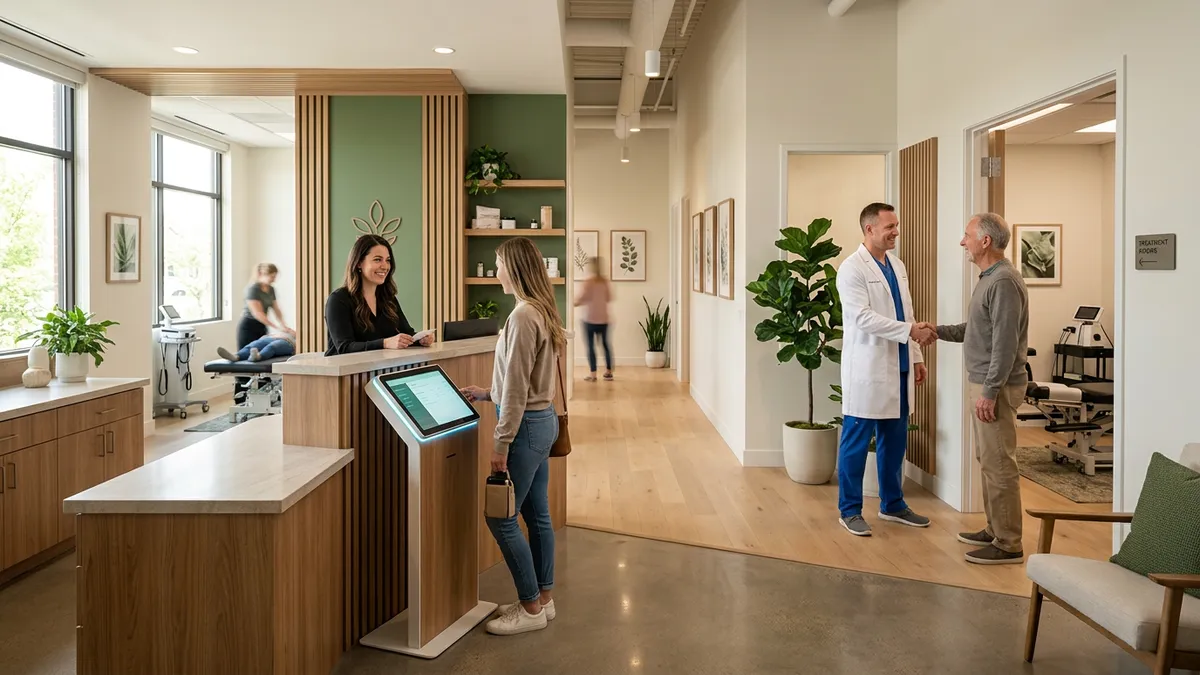
Pacific Coast Chiropractic & Wellness operates two busy locations in Orange County — one in Irvine, one in Lake Forest. Between both sites, they employ 22 people: chiropractors, physical therapists, massage therapists, medical assistants, front desk staff, and a billing coordinator. Each location sees 50 to 60 patients per day for adjustments, physical therapy, rehabilitation, and wellness visits.
Chiropractic care is built on recurring appointments. A typical treatment plan runs 12 to 24 visits over several months. That means the practice depends on patients showing up consistently — and when they don't, the financial impact compounds fast. Dr. James Park knew he had multiple problems, but the one he felt every single day was empty chairs.
The no-show rate across both locations was 23%. Nearly one in four scheduled patients didn't show up. Some forgot. Some couldn't get through to reschedule. Some just drifted away mid-treatment because nobody followed up after a missed visit.
The front desk staff at each location tried to call every patient the day before their appointment. With 100+ combined daily appointments across two sites, they couldn't keep up. Calls went to voicemail. Patients meant to call back but didn't. Time slots sat empty while new patients waited two weeks for an opening.
Dr. Park did the math. Each missed appointment cost an average of $85 in lost revenue. At 23% no-shows across 500 weekly appointments, that was $9,775 per week — over $500,000 per year in revenue walking out the door. Even cutting the no-show rate in half would recover $250,000 annually.
Each location had been set up independently. The Irvine office ran on a local server installed four years ago. The Lake Forest office used a different server from a different vendor. The two sites couldn't share patient records easily — staff at one location couldn't pull up a patient's chart from the other location without calling and asking someone to fax or email it.
There was no remote monitoring on either server. No automated patching. No centralized management of the 18 workstations across both sites. When something broke at Lake Forest, the Irvine office manager drove over to troubleshoot — or they called a local tech who charged $165 per hour and showed up within a day or two.
Backups existed at the Irvine location — a USB external drive that an employee was supposed to swap out weekly. Nobody had checked whether those backups actually worked. The Lake Forest office had no backup system at all. If that server failed, every patient record, treatment plan, and billing history from three years of operation would be gone.
Neither location had endpoint protection beyond Windows Defender. The Wi-Fi at both offices used consumer-grade routers with default admin passwords. Staff at both locations shared a single login for the practice management system — "frontdesk" with a password that hadn't changed since opening day.
Three therapists used personal phones to photograph patient intake forms so they could review treatment notes between locations. Those photos synced to personal iCloud accounts — PHI stored on unmanaged, unencrypted personal devices outside the practice's control.
The billing coordinator sent patient insurance information and treatment codes to the billing clearinghouse via regular email — no encryption, no audit trail. If that email account were compromised, every patient's insurance details, diagnosis codes, and personal information would be exposed.
Pacific Coast had never conducted a security risk assessment. There were no written HIPAA policies. No Business Associate Agreements with their EHR vendor, billing clearinghouse, cloud service provider, or the third-party PT referral network. No documented staff training. No breach response plan.
When Dr. Park asked his office manager about HIPAA compliance, she pointed to a binder from when the practice opened. It contained a template privacy notice and nothing else. With two locations, 22 employees, and thousands of patient records flowing between unprotected systems, the exposure was substantial.
Beyond the no-show crisis, the phones at both locations rang constantly with new patient inquiries, insurance questions, directions, rescheduling requests, and follow-up questions about treatment plans. Each location received 40 to 50 calls per day on top of the reminder calls staff were trying to make.
After 5 PM and on weekends, everything went to voicemail. Chiropractic patients frequently call in the evening after a day of back pain, or on Saturday morning after sleeping wrong. Those calls went unanswered. Dr. Park's staff returned voicemails the next business day — if the patient hadn't already booked with a competitor.
We assessed both locations over three days — every device, network path, server, backup system, user account, vendor relationship, and compliance document. The findings: 19 critical IT and security vulnerabilities, zero HIPAA documentation, a no-show rate draining $500K per year, and a phone system losing new patients daily.
We designed a 60-day plan that addressed all four areas across both sites simultaneously. The problems were connected — fixing no-shows without securing the patient data flowing through the reminder system would create new compliance risks. We built the whole solution as one integrated deployment.
This was the most urgent problem, so we deployed it first. We implemented our full AI-powered phone and appointment system across both locations:
The full deployment — AI receptionist, managed IT, cybersecurity, and HIPAA compliance — was completed in 60 days across both locations. We migrated one site at a time so patient care never stopped. Pricing for two-location deployments starts on our pricing page.
Within 90 days of going live, the no-show rate dropped from 23% to 14%. By month six, it stabilized at 13.8% — a 40% reduction. The reminder sequences worked exactly as designed: patients confirmed via text, rescheduled when they couldn't make it, and re-engaged when they started drifting from their treatment plans.
In dollars, the practice recovered $75,000 in annual revenue from appointments that would have been missed. That's a first-year figure — recovered appointment revenue net of the ramp-up months while the reminder sequences took hold — and with the no-show rate still trending down, the gap between it and the back-of-napkin $250,000 keeps narrowing. The smart waitlist filled an additional 18 slots per week across both locations — cancellation slots that previously sat empty because nobody knew about them in time.
The AI phone receptionist handled 65% of all inbound calls without staff involvement. New patient scheduling, rescheduling, insurance questions, directions, and hours — all handled instantly. The cross-location booking feature proved especially valuable: when Irvine was fully booked on a Thursday, the AI offered patients a Friday slot at Lake Forest. In the first six months, cross-location bookings accounted for 8% of all new appointments — patients who would have been told "we don't have anything available this week" and gone elsewhere.
After-hours bookings accounted for 16% of all new patient appointments. These were people calling with back pain at 8 PM or stiff necks on Saturday morning — patients who would have reached voicemail and either waited in pain or called a competitor. At an average new patient value of $85 per visit with a 12-visit treatment plan ($1,020 lifetime value), those recovered patients represent significant long-term revenue.
Reminder calls and phone juggling used to eat 3+ hours of front desk time daily. That work is gone. Over 30 hours a week across both locations now go to greeting patients, verifying insurance, processing payments, and treatment plan adherence follow-up.
The site-to-site connection changed daily operations immediately. For the first time, a provider at Irvine could pull up a patient's complete history from Lake Forest — treatment notes, X-rays, billing records — without a phone call or fax. Patients who visited both locations for convenience no longer had to repeat their history at each site.
In 10 months since go-live, both locations have experienced zero unplanned outages. The server that had no backup at Lake Forest? Our monitoring caught a failing RAID controller six weeks after deployment and replaced it during an overnight window. Without monitoring, that server would have crashed during business hours — taking every patient record with it.
Monthly IT costs became predictable. The practice went from an average of $2,400 per month in break-fix charges (with spikes to $4,100 during emergencies) to a flat monthly fee covering both locations. First-year IT savings: $14,800. That includes monitoring, help desk, security, backups, and the SD-WAN connecting both sites.
Help desk response time averages 52 seconds. The Irvine office manager who used to drive to Lake Forest to troubleshoot tech problems hasn't made that trip once since we took over.
In the first 10 months, the security stack blocked 384 malicious emails across both locations, detected and quarantined 22 malware attempts, and stopped one brute-force attack against the practice management system's remote access portal. None of them became a breach, and no patient record was exposed.
The shared "frontdesk" login is gone. Every chart access is now tracked to an individual employee. When the billing coordinator sends insurance information to the clearinghouse, it goes through encrypted email with a full audit trail — not plain-text Gmail.
Phishing simulation results improved steadily. First test: 28% of employees clicked the simulated phishing link. By the third quarter: 7%.
Pacific Coast now has a complete compliance program that covers both locations under a unified framework. The risk assessment documents every system, every data flow between sites, and every vendor relationship. All 7 BAAs are signed and current. All 22 employees have completed training with documented sign-off.
Dr. Park's perspective shifted during the engagement: "I came to 4MEDNET because of no-shows. That was the problem I could see and feel every day — empty chairs, lost revenue, frustrated staff. What I didn't see was that our patient data was unprotected, our HIPAA compliance was nonexistent, and our two offices were operating like separate businesses. They fixed the no-shows — but they also fixed everything I didn't know was broken. Now both locations run like one practice, the data is protected, and my staff actually has time to take care of patients instead of chasing phone calls and IT problems."
Running a multi-location practice with empty chairs and disconnected systems? Book a free consultation and we'll assess your full operation — scheduling, IT infrastructure, security, and compliance.
“Empty chairs were the problem I could see — a 23% no-show rate across two clinics adds up fast, and the reminder texts fixed it. What I didn't expect was pulling up a Lake Forest patient's complete chart from my Irvine office without anyone faxing a thing.”
Dr. James Park, DC — Pacific Coast Chiropractic & Wellness
No-Show Reduction
Revenue Recovered
Threats Blocked (10 mo)
Calls Handled by AI
The opposite. Our messages use the patient's name, appointment type, provider name, and location. They feel personal because the content is specific to each visit. Patients appreciate confirming with a single text reply instead of answering a phone call during work hours. The AI phone receptionist uses natural conversation — callers don't feel like they're talking to a machine.
Yes. We integrate with all major chiropractic and PT practice management systems including ChiroTouch, Jane App, Athenahealth, DrChrono, and many others. The system reads your schedule in real time, syncs confirmation status back automatically, and books new appointments directly. No double-entry required.
We use encrypted SD-WAN tunnels that connect your locations through a secure private network. Your staff at either site can access the same patient records, treatment histories, and scheduling systems as if they were sitting in the same office. The connection is encrypted end-to-end and monitored 24/7. It's faster than a VPN and far more secure than emailing or faxing records between locations.
The system escalates through multiple channels — text first, then email, then a voice call. If there's still no response, the front desk gets an alert to make a personal call. The system handles 85% of confirmations automatically so your team only calls the patients who truly need a human touch. For treatment plan patients who stop showing up entirely, we run a re-engagement sequence to bring them back.
Every practice we work with starts the same way — a free, no-pressure consultation. We'll review your current setup and show you exactly where we can help.

Managed IT, cybersecurity, HIPAA compliance, and AI automation for healthcare practices. We keep your technology secure so you can focus on patient care.

4MEDNET.COM - Copyright 2026. All rights reserved.