Cybersecurity: 24/7/365

Cybersecurity: 24/7/365
4MEDNET delivers managed IT, cybersecurity, HIPAA compliance, and AI automation solutions built exclusively for healthcare practices.
Radiance Medical Spa · Santa Monica, CA



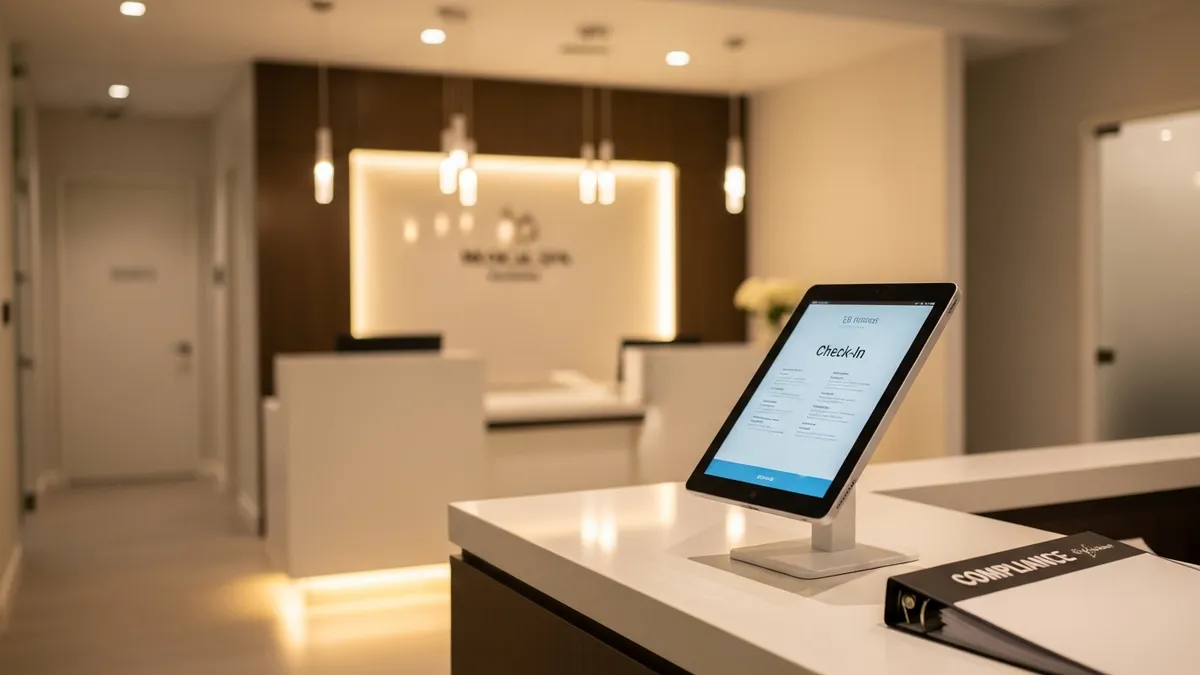
Radiance Medical Spa operates a high-end practice in Santa Monica, California. They offer Botox, dermal fillers, laser skin resurfacing, body contouring, IV therapy, and medical-grade skincare. The owner, Dr. Karen Reeves — a licensed nurse practitioner and certified aesthetician — built the business from scratch over six years. She focused on clinical excellence and patient experience. Everything else, she figured out as she went.
That approach worked for growth. It did not work for compliance, security, or operations.
When a competing med spa two blocks away received a $175,000 HIPAA fine after a patient complaint, Dr. Reeves got the wake-up call she'd been ignoring. The complaint was simple — a patient found their before-and-after photos on the spa's social media without written consent. The investigation uncovered a cascade of violations: no risk assessment, no policies, no training records, no Business Associate Agreements. The fine was for the systemic failures, not just the photos.
Dr. Reeves took an honest look at Radiance and realized the same thing could happen to her. There was no written security risk assessment — the single most common deficiency in OCR enforcement actions. There were no signed BAAs with any of their 9 vendors who handle patient data. No documented HIPAA training for the 16 employees. No breach response plan. No policies governing data access, device management, or social media use.
Patient intake forms collected health history, medications, allergies, and skin conditions on paper clipboards in the waiting room — visible to other patients sitting nearby. After treatment, clinicians recorded notes in the practice management system, but the before-and-after photos lived somewhere else entirely.
Before-and-after photography is core to a medical spa's business. It drives consultations, builds social proof, and documents clinical outcomes. Radiance took thousands of patient photos per year. The problem was how they stored and shared them.
All photos lived on a shared Dropbox account. Every employee with the link could access every patient's images — including front desk staff who had no clinical reason to see them. Photos were organized by date, not by patient, making it impossible to pull a specific patient's complete image history without scrolling through hundreds of files.
Staff regularly downloaded photos to personal phones for social media posts. Three employees had patient images on their personal iCloud and Google Photos accounts — backed up automatically, synced across personal devices, and completely outside the practice's control. If any of those personal accounts were compromised, patient photos would be exposed.
Two aestheticians used personal cell phones to text appointment reminders that included procedure details. "Hi Sarah — reminder about your Botox appointment tomorrow at 2 PM, we'll also do the lip filler consult." Texts like that are PHI transmitted on an unencrypted, unmanaged channel. Every one is a HIPAA violation.
The practice operated on a single consumer Wi-Fi network. Patient credit card transactions, the practice management system, the Dropbox sync, guest Wi-Fi in the waiting room, and staff personal devices all shared the same network. There was no segmentation, no firewall beyond the router's default settings, and no monitoring of any kind.
Workstations had no endpoint protection beyond Windows Defender. Three machines ran Windows 10 that hadn't received a security patch in seven months. The practice management system stored patient records, treatment histories, health questionnaires, consent forms, and billing data. If an attacker gained access to any device on the network, they could reach everything.
Nobody at Radiance thought of themselves as a target. "We're a med spa, not a hospital" was the common assumption. But med spas store the same categories of protected health information as any other healthcare provider — and OCR enforces the same rules regardless of practice type or size.
Radiance received 60 to 80 phone calls per day. Prospective patients called about pricing, procedure details, downtime expectations, package options, and consultation availability. Existing patients called about appointments, post-treatment questions, product refills, and follow-ups. Two front desk employees managed the phones while greeting walk-ins, processing payments, and handling scheduling.
Calls stacked up. Hold times stretched past two minutes during peak hours. Voicemails accumulated — 15 to 20 per day — and callbacks often happened 24 to 48 hours later. For a business that sells elective procedures to high-end clients, slow response is a deal-killer. Prospective patients who can't get through don't leave a voicemail. They call the next med spa on their list.
After 6 PM and on weekends, every call went to voicemail. Dr. Reeves knew this was a problem because 40% of her consultation bookings came from people who first researched treatments in the evening — browsing Instagram, reading reviews, then picking up the phone. Those calls went unanswered until Monday morning, if the patient bothered to call back at all.
We started with a comprehensive assessment that covered compliance, security, IT infrastructure, and front desk operations. Over four days, our team audited every device, every network path, every vendor relationship, every data workflow, and every piece of compliance documentation — or in Radiance's case, the absence of it.
The assessment report identified 23 critical vulnerabilities, zero HIPAA-compliant documentation, patient photo storage that violated multiple HIPAA provisions, and a front desk losing consultations every day. We designed a 90-day remediation plan that addressed all four areas simultaneously.
We deployed an AI-powered phone receptionist designed for the med spa's unique call patterns. Unlike a dental practice or urgent care, a med spa's phone traffic is heavily sales-oriented — prospective patients comparing providers, asking about pricing, and deciding whether to book a consultation.
The full deployment — HIPAA compliance, cybersecurity, managed IT, and AI receptionist — was completed in 90 days. Every piece was adapted for the specific needs of a medical aesthetics practice. Plans and monthly rates are posted on our pricing page.
Three months after completing our program, Radiance received notification of a random HIPAA compliance audit triggered by their state licensing board. The timing could not have been better — or more stressful.
The auditor spent two days reviewing policies, interviewing staff, and inspecting technical controls. She walked through photo storage workflows, examined consent documentation, tested network segmentation, and verified training records for every employee. The result: zero findings. Not a single deficiency.
The auditor specifically called out three strengths: the quality of the risk assessment documentation, the thoroughness of the staff training records, and the med-spa-specific photography and social media policies. These are areas where most practices fail — and where most template compliance kits fall short.
Dr. Reeves later learned that the competing med spa that had received the $175,000 fine was still working through its corrective action plan 18 months later. Radiance was done in 90 days and came through clean.
Tally the violations Radiance had been carrying — no risk assessment, no BAAs, no training, unsecured photo storage, PHI in personal text messages — and the fine exposure topped $250,000. All of it closed out in one 90-day engagement.
The photo storage migration was the most visible change. Patient images moved from a shared Dropbox (accessible to all 16 employees) to an encrypted, role-based system where clinicians see only their own patients' photos. Every access is logged. Every download is tracked. The three employees with patient photos on personal devices had those images securely wiped — and understood exactly why it mattered.
In the first 12 months, the security stack blocked 247 malicious emails, detected and quarantined 12 malware attempts, and stopped one credential-stuffing attack against the practice management system login page. None of these incidents resulted in a breach or required any downtime.
The phishing simulations showed rapid improvement. First test: 25% of employees clicked the simulated phishing link — a fake Allergan promotional email. By the third quarter, the click rate dropped to 4%.
Network segmentation meant that even if a guest's device in the waiting room were compromised, the attacker could not reach patient records, photos, or payment systems. That single change eliminated an entire category of risk that had existed since the practice opened.
In 12 months since go-live, Radiance has experienced zero unplanned outages. The practice management system, photo storage, payment processing, and booking platform have been available every minute the practice was open.
When one workstation's hard drive showed early degradation, our monitoring flagged it two weeks before failure. We replaced the drive overnight. The aesthetician who used that machine didn't lose a single patient file or an hour of work.
Monthly IT costs became flat and predictable. Before our engagement, Dr. Reeves spent an unpredictable $1,200 to $3,800 per month on tech support calls, emergency fixes, and software troubleshooting. Now she pays a single monthly fee that covers monitoring, security, compliance, help desk, backups, and the cloud environment. First-year IT savings: $11,200.
The aesthetician who used to troubleshoot the booking system between clients? She spends that time on patients now. The office manager who spent 5 to 6 hours per month dealing with IT issues is down to 15 minutes.
The AI receptionist changed how Radiance converts phone inquiries into booked consultations. In the first 12 months, the system handled over 21,000 inbound calls. Of those, 68% were fully resolved by the AI — pricing questions answered, consultations booked, appointment details confirmed, post-treatment instructions provided.
The biggest impact was on new patient conversion. Before the AI, prospective patients who called during peak hours often waited two or more minutes on hold — then hung up. After-hours callers reached voicemail and rarely called back. With the AI answering every call instantly, consultation bookings increased by 30% in the first six months.
After-hours bookings were the standout metric. The AI handles calls from 6 PM through the next morning and all weekend. Evening and weekend consultation bookings accounted for 22% of all new appointments — patients who had previously reached voicemail and moved on to a competitor. At an average initial consultation value of $350 (with many converting to multi-treatment plans worth $2,000 to $5,000), those recovered bookings represent substantial monthly revenue.
Where the front desk once spent 2.5 hours a day on the phone, they now spend under 40 minutes — and the 50-plus hours that come back each month go to greeting patients, faster payment processing, the waiting room experience, and treatment plan conversions.
Abandoned calls dropped from 15-20 per day to under 3. Hold times during business hours dropped from 2+ minutes to zero — the AI answers every call on the first ring.
Running a medical spa with patient photos on personal devices and calls going to voicemail? Book a free consultation and we'll assess your compliance, security, IT, and front office operations.
“I built this practice on patient experience. But I was losing patients before they walked through the door — to hold times, voicemail, and unanswered weekend calls. Now every person who picks up the phone gets an immediate, helpful response.”
Dr. Karen Reeves, NP — Radiance Medical Spa
HIPAA Audit Findings
Potential Fines Avoided
Consultation Bookings
Threats Blocked (12 mo)
Yes — if you provide any medical service, prescribe medications, or bill insurance, you're a covered entity under HIPAA. Medical spas that perform procedures like Botox, laser treatments, or IV therapy all handle protected health information. Before-and-after photos are PHI. Treatment notes are PHI. The fines for non-compliance apply equally regardless of practice size. OCR has fined med spas specifically for photo storage and social media violations.
We migrate photos from consumer platforms like Dropbox or Google Drive to a HIPAA-compliant, encrypted storage system with role-based access controls. Only authorized clinicians can view their own patients' images. Every access is logged for audit purposes. We also help establish photography consent workflows and social media policies so your marketing team can use patient photos legally and safely.
Med spa inquiries are actually an ideal fit because most calls follow predictable patterns — pricing, procedure details, downtime expectations, package options, and booking. The AI provides helpful, accurate information that moves callers toward booking a consultation. For complex clinical questions, it routes to the right provider with full context. Practices that deploy it typically see consultation bookings increase because every call gets answered instantly — no hold times, no voicemail, no lost leads.
Audits can be triggered by patient complaints to HHS (including complaints about photo use), random selection by the Office for Civil Rights, state licensing board reviews, or as a follow-up to a reported breach. You can't predict when one will happen. The practices that survive audits are the ones with documentation ready before the notice arrives — not the ones who scramble to create it after.


Managed IT, cybersecurity, HIPAA compliance, and AI automation for healthcare practices. We keep your technology secure so you can focus on patient care.

4MEDNET.COM - Copyright 2026. All rights reserved.