Cybersecurity: 24/7/365

Cybersecurity: 24/7/365
4MEDNET delivers managed IT, cybersecurity, HIPAA compliance, and AI automation solutions built exclusively for healthcare practices.
Urgent Care Clinic · Torrance, CA



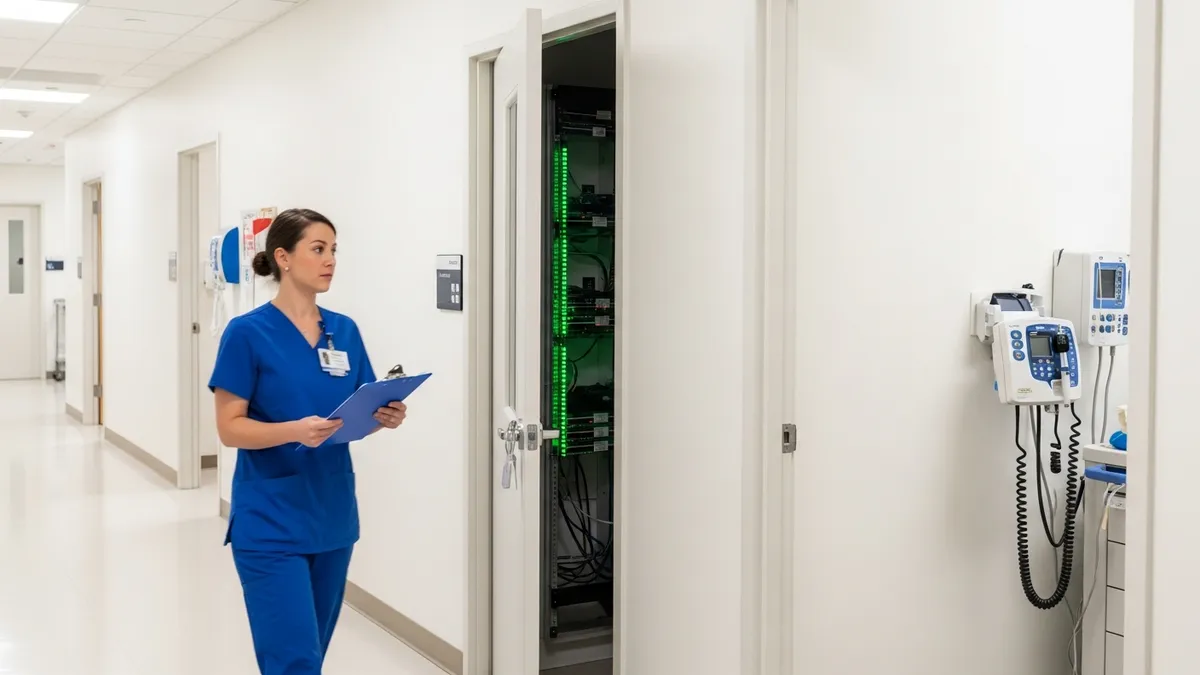
The clinic operates a single high-volume clinic in Torrance, California. They see 80 to 100 patients per day — walk-ins with fractures, lacerations, fevers, chest pain, and everything in between. It employs 28 people: physicians, physician assistants, nurses, medical assistants, X-ray techs, front desk staff, and a small billing team.
Urgent care isn't like a scheduled practice. Patients don't make appointments weeks in advance. They show up when something is wrong, and they need answers fast. That makes every system in the building — EHR, imaging, labs, billing — mission-critical every minute the doors are open. When a system goes down in an urgent care clinic, it's not an inconvenience. It's a patient safety issue.
The clinic's IT infrastructure was built when the clinic opened and never updated. The EHR, digital X-ray system, and billing platform all ran on a single on-premise server in a utility closet. The server was five years old, had no redundancy, and hadn't been patched in 14 months. Every workstation connected through a consumer-grade router — the same model sold at electronics stores for home Wi-Fi.
There was no remote monitoring. No one knew when a hard drive was failing, when a backup didn't complete, or when a workstation stopped receiving security updates. The clinic manager handled IT problems herself by calling a local technician who charged $175 per hour and usually couldn't come until the next day.
The server had crashed twice in the past 18 months. Each time, the clinic ran on paper charts and manual billing until the tech restored things. The first crash cost 6 hours of downtime. The second cost a full day. The clinic manager estimated each hour of downtime cost the clinic $1,100 in lost revenue — patients who left, procedures that couldn't be billed, and staff standing around without access to records.
The security picture was worse than the IT picture — and the clinic manager knew it. A neighboring urgent care two miles away had been hit by ransomware six months earlier. That clinic paid $120,000 to recover their data and was offline for nine days. Patients were diverted to the clinic during the shutdown, which gave the clinic manager a front-row view of what a breach looks like from the outside.
The clinic's own defenses amounted to basic Windows Defender on workstations and the consumer router's built-in firewall. No endpoint detection. No email security gateway. No intrusion prevention. Three workstations in the front office shared a single login — "harbor1 / welcome123" — so any employee could log in without credentials being tied to an individual. Two X-ray techs used personal Gmail accounts to send images to the reading radiologist because the clinic's email didn't support large attachments.
No one at the clinic had completed security awareness training. No one had run a phishing simulation. Staff clicked on emails from unknown senders regularly because no one had told them not to — or shown them what a phishing email looks like.
The clinic manager had a vague understanding that HIPAA applied to the clinic, but compliance had never been a priority. There was no written security risk assessment — the most commonly cited deficiency in OCR enforcement actions. There were no signed Business Associate Agreements with their EHR vendor, cloud backup provider, billing clearinghouse, or the third-party radiologist who received patient images via Gmail.
The clinic had no breach response plan. No documented policies for data access, device management, or workforce training. No evidence of any HIPAA training for the 28 employees.
If the clinic had been breached — or if a patient had filed a complaint — the lack of documentation alone could have triggered fines starting at $50,000 per violation category. With the number of gaps we later identified, the total fine exposure ran past $300,000.
The clinic received 120 to 150 phone calls per day. Patients called about wait times, walk-in hours, insurance questions, directions, prescription refills, and follow-up scheduling. Two front desk employees answered phones while simultaneously checking patients in, verifying insurance, collecting copays, and managing the waiting room.
The result was predictable. Calls went unanswered. Patients who couldn't get through either drove to the clinic hoping for the best, went to a competitor, or went to the emergency room. The clinic manager tracked abandoned calls for one week and counted 35 to 40 per day — calls that rang through to voicemail or were hung up after 60+ seconds on hold.
After 6 PM and on weekends, every call went to a generic voicemail. The clinic stays open until 8 PM on weekdays and 5 PM on weekends, but the phone system had never been updated to match the extended hours. Patients calling at 6:30 PM heard "We're currently closed" and hung up — even though the clinic was open and seeing patients.
We started with a full infrastructure and compliance assessment. Our team spent three days on-site auditing every device, network path, software license, user account, backup system, vendor relationship, and compliance document. The assessment uncovered 27 critical vulnerabilities, zero HIPAA-compliant documentation, and a front desk operation that was losing patients every hour.
We designed a 60-day remediation plan covering cybersecurity, managed IT, HIPAA compliance, and front office operations. Nothing was optional — the problems were too interconnected. A firewall upgrade without proper IT monitoring would still leave them exposed. HIPAA documentation without security controls would be paperwork with no substance. We addressed everything together.
We deployed an AI-powered phone receptionist that answers every inbound call — during business hours, after hours, weekends, and holidays. For a high-volume urgent care clinic, this was transformational.
The full deployment — cybersecurity, managed IT, HIPAA compliance, and AI receptionist — was completed in 60 days. Our pricing page shows what a package like this costs for a single-location clinic.
Endpoint detection catches the encryption behaviour as it starts, isolates the affected machine from the network automatically, and pages the security operations centre. Containment happens in minutes, not hours — before the payload can move laterally toward the EHR or the imaging archive.
No patient record is encrypted. No ransom decision has to be made. The clinic keeps seeing patients while the machine is rebuilt from a clean image.
Monitoring catches failing hardware before it fails. Patching runs on a schedule instead of whenever someone remembers. Emergency call-outs stop being a line item, because the failures that used to cause them are caught while they are still warnings.
Risk assessment, BAAs, policies, training records and incident response documentation are current and retrievable. A compliance review turns into a document request rather than a scramble.
Most inbound calls — hours, wait times, insurance questions, directions, appointment booking — resolve without a human. The ones that need a person arrive with context, so nobody is put on hold while somebody finds out who they are.
Phone wait times drop, front desk staff stop triaging the queue, and after-hours callers reach something that can actually help instead of a voicemail box nobody clears until morning.
Running an urgent care clinic with consumer-grade security and overwhelmed staff? Book a free consultation and we'll assess your full operation — cybersecurity, IT infrastructure, compliance, and front office workflows.
“I used to lie awake thinking about ransomware. Now I sleep through the night because someone is watching everything — the network, the phones, the compliance. We went from the most exposed clinic on the block to the most protected.”
Clinic Manager — urgent care clinic, Torrance, CA
Traditional antivirus only catches known threats by matching file signatures. Endpoint detection and response (EDR) watches for suspicious behavior patterns in real time — things like a program trying to encrypt files rapidly or a process attempting to disable security software. It can detect and stop brand-new ransomware variants that antivirus databases don't recognize yet. It's the difference between checking IDs at the door and having a security team watching every room.
Urgent care is actually one of the best fits for AI call handling. The majority of calls are repetitive — wait times, hours, insurance accepted, directions, follow-up scheduling. The AI handles those instantly so your front desk can focus on the patients standing in front of them. For anything clinical or complex, the AI routes the call to the right person with full context. Callers who need a human get one. Callers who just need a quick answer get one faster than a human could provide it.
Our defense works in layers specifically for this reason. If malware bypasses email filtering, EDR catches it on the endpoint. If it somehow executes, network segmentation limits its reach. Our immutable backups mean you can restore everything without paying a ransom — the backup data physically cannot be encrypted or deleted by an attacker. And our 24/7 SOC monitoring means human analysts are always watching and can isolate threats in minutes.
For a single-location practice like the clinic, we typically complete the full deployment in 45 to 60 days. Cybersecurity and IT monitoring go live in the first two weeks. HIPAA documentation and staff training run in parallel over the next 30 days. The AI receptionist is configured and tested during weeks three and four and goes live once staff are comfortable with the call routing. Nothing disrupts patient care during the transition.

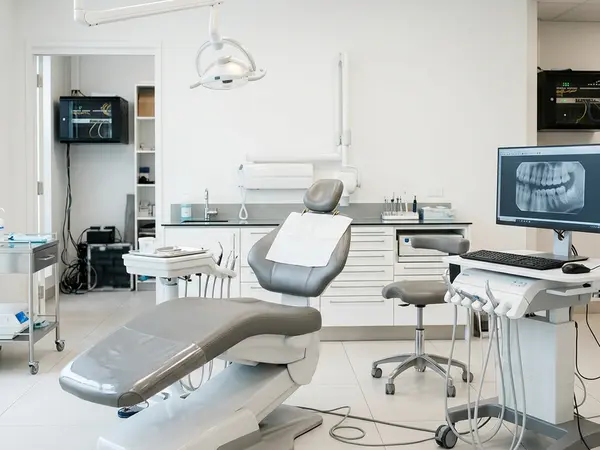


Managed IT, cybersecurity, HIPAA compliance, and AI automation for healthcare practices. We keep your technology secure so you can focus on patient care.

4MEDNET.COM - Copyright 2026. All rights reserved.