Cybersecurity: 24/7/365

Cybersecurity: 24/7/365
4MEDNET delivers managed IT, cybersecurity, HIPAA compliance, and AI automation solutions built exclusively for healthcare practices.
Sierra Dental Group · Pasadena, CA



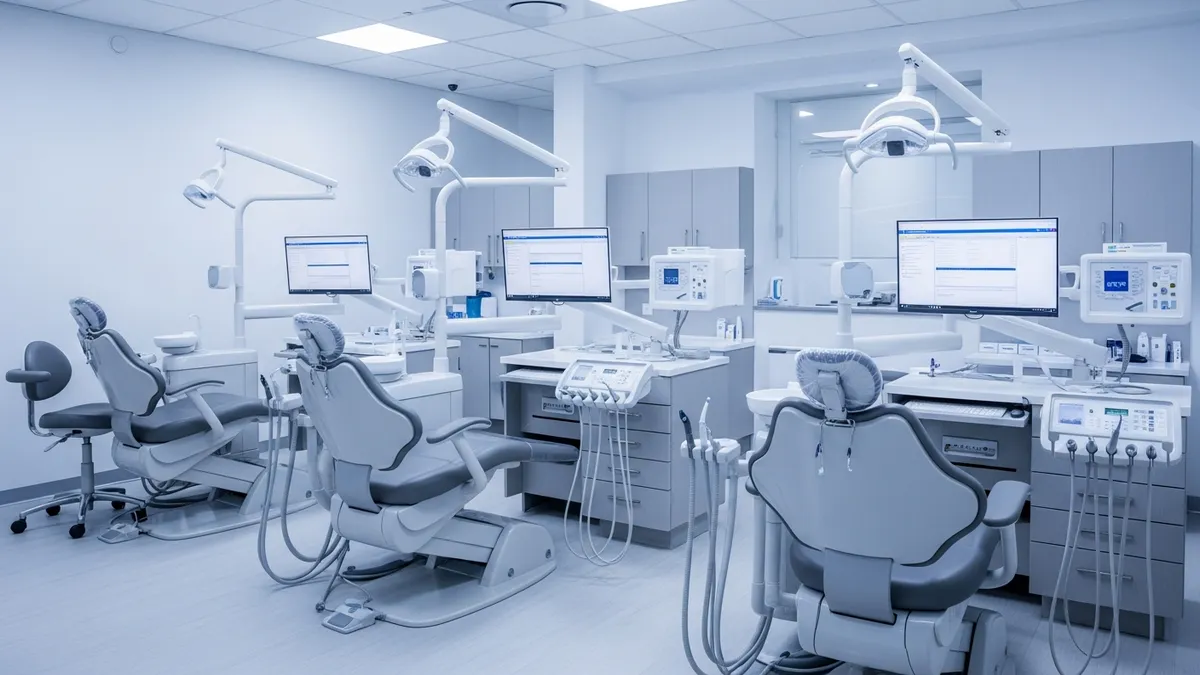
Sierra Dental Group operated three busy offices across Pasadena and the San Gabriel Valley. Between the three locations, they employed 42 people — dentists, hygienists, assistants, front desk staff, and a billing team. On paper, the practice was thriving. Revenue was strong. Patient volume was growing. But behind the scenes, the operation was held together with duct tape.
Each location had been set up by a different person at a different time. The main office ran on an aging Dell server from 2018. The east location used a consumer-grade Wi-Fi router from Best Buy. The west location had a "tech-savvy" dental assistant who handled IT problems between patients.
There was no centralized monitoring, no remote management, and no way to see what was happening across the three sites without physically driving there. When something broke — and it broke often — the practice owner called a break-fix technician who charged $195 per hour and showed up when he could. Sometimes that meant same day. Sometimes it meant Thursday.
In one month alone, their main office lost two full business days to a server crash. The imaging system at the east location went down three times in six weeks. Front desk staff couldn't check patients in. Hygienists couldn't pull X-rays. The billing team fell behind on insurance claims because they couldn't access the practice management system.
Dr. Mitchell estimated the practice lost $8,400 per day in revenue during each outage — empty chairs, rescheduled patients, and staff standing around with nothing to do.
The IT problems were visible. The security problems were invisible — and far more dangerous.
None of the three locations had endpoint detection software. Every workstation ran basic Windows Defender, which hadn't been updated in months on several machines. The east office firewall was a consumer router with the default admin password still active. Two imaging workstations shared a single login — "frontdesk / password123" — that every employee at that location knew.
Staff used personal Gmail accounts to send patient records between offices. No encryption. No audit trail. One employee had forwarded a patient's full treatment plan and insurance details to a personal Yahoo account so she could "work on billing from home."
No one had run a phishing simulation. No one had completed security training. The practice had never experienced a breach — that they knew of — but they had no way of knowing if data had been accessed without authorization.
Sierra Dental had a HIPAA compliance binder on a shelf in the main office. It was from 2019. No one had opened it in two years.
There was no current security risk assessment — the single most-cited deficiency in OCR audits. There were no signed Business Associate Agreements with their imaging software vendor, their cloud backup provider, or their billing clearinghouse. Backup systems existed at two locations but had never been tested. The third location had no backup at all.
If a patient had filed a complaint or if the practice had been selected for a random audit, the fines could have reached six figures. HIPAA penalties for willful neglect start at $50,000 per violation.
Beyond the technical problems, Sierra Dental's front desk staff were overwhelmed. Each location received 60 to 80 phone calls per day. Patients called to schedule appointments, confirm times, ask about insurance, request records, and check on billing. The two front desk employees at each location couldn't keep up.
Calls went to voicemail. Voicemails piled up. Patients who couldn't get through called back — or didn't. The practice had no after-hours call coverage. Any call that came in after 5 PM or on weekends went unanswered until the next business day.
Dr. Mitchell estimated that 15 to 20 calls per day across the three locations were going unanswered. At an average appointment value of $285, even a fraction of those missed calls turning into missed appointments represented significant lost revenue.
We started with a comprehensive assessment across all three locations. Over five days, our team audited every device, network configuration, software license, user account, backup system, and compliance document. The findings filled a 22-page report.
Here's the short version: the practice had 31 critical vulnerabilities, zero compliance documentation that would survive an audit, and a front desk operation that was leaving money on the table every day.
We built a 90-day remediation plan that addressed everything — IT infrastructure, cybersecurity, HIPAA compliance, and front office operations. We migrated one location at a time so patient care never stopped.
We deployed an AI-powered phone receptionist across all three locations. The system answers every call — during business hours, after hours, weekends, and holidays. It never puts a patient on hold.
The entire rollout — IT, security, compliance, and AI receptionist — was completed in 90 days. Every step followed our managed IT service framework built for healthcare practices. Flat-rate plans for multi-location groups are listed on our pricing page.
Six months after go-live, total downtime dropped from 47 hours per quarter to under 3 hours. That's a 94% reduction. The remaining downtime was planned maintenance windows scheduled after hours.
Staff stopped losing time to IT problems. Workstations boot up and just work. The imaging system hasn't gone down once. The billing team caught up on $34,000 in delayed insurance claims within the first month — claims that had been stuck because they couldn't access the practice management system during outages.
Monthly IT spending became predictable. The practice went from an average of $4,200 per month on break-fix repairs — with spikes up to $7,000 — to a flat fee of $3,850 covering all three locations. The direct savings are modest, about $4,200 a year. The real win is that the number stopped moving: Dr. Mitchell can budget IT to the dollar, and the fee covers everything the break-fix guy never provided — monitoring, security, compliance, and a help desk that actually picks up.
In the first 12 months, the security stack blocked 1,423 malicious emails, detected and quarantined 38 malware attempts, and stopped two credential-stuffing attacks against the practice's patient portal. None of these incidents resulted in a breach. None required downtime. None reached a patient record.
The quarterly phishing simulations showed measurable improvement. In the first test, 34% of employees clicked the simulated phishing link. By the fourth quarter, the click rate dropped to 6%. Staff now regularly forward suspicious emails to the security team — something that never happened before.
Eight months after our engagement began, Sierra Dental received notification of a compliance review triggered by their state dental board. The timing validated everything we'd built.
We provided the auditor with the complete documentation package: current risk assessment, signed BAAs for all 11 vendors, staff training records with completion dates, written policies, and backup test logs. The review concluded with zero findings and zero required corrective actions.
The AI receptionist transformed front desk operations. In the first six months, the system handled more than 25,000 inbound calls across all three locations. Of those, 73% were fully resolved by the AI without any human involvement — appointments booked, questions answered, information provided.
The remaining 27% were routed to the appropriate staff member with context. The AI told the employee who was calling, which location they were associated with, and what they needed before the call connected. No more "Can you hold while I transfer you?"
Front desk staff went from spending 3+ hours per day on phone calls to under 45 minutes. That freed up over 200 staff hours per month across the three locations — time that was redirected to patient check-in, insurance verification, and treatment plan coordination.
After-hours bookings accounted for 18% of all new appointments in the first quarter. These were patients who called evenings and weekends and would have reached voicemail under the old system. At an average appointment value of $285, that represents over $12,000 per month in revenue that previously walked away.
The practice turned off voicemail entirely. Patient satisfaction scores on post-visit surveys increased by 22%, with multiple patients specifically mentioning how easy it was to schedule by phone.
Dr. Mitchell told us something we hear from practice owners who've gone through this kind of transformation: "I didn't realize how many problems we had until they all went away at once. I thought we just had an IT problem. Turns out we had an IT problem, a security problem, a compliance problem, and a staffing problem — and they were all connected."
Running a multi-location practice with disconnected systems and overwhelmed staff? Book a free consultation and we'll assess your full operation — IT, security, compliance, and front office workflows.
“The imaging system at our east office went down three times in six weeks the year before we switched. It hasn't failed once since. My billing team cleared $34,000 in stuck insurance claims the first month. We used to pay for chaos — now we pay a flat fee and get an actual system.”
Dr. Sarah Mitchell, Owner — Sierra Dental Group
Downtime Reduction
Threats Blocked (12 mo)
HIPAA Audit Findings
Staff Hours Recovered
We typically complete a full multi-location rollout in 60 to 90 days. We migrate one site at a time so your practice never goes offline during the transition. Each location gets its own go-live date with a dedicated technician on-site. The compliance documentation and AI receptionist deployment happen in parallel so nothing is waiting on anything else.
The AI uses natural language processing and sounds conversational — not robotic. Most patients don't realize it's AI unless they ask. It handles appointment scheduling, answers common questions about office hours, insurance, and directions, and routes complex calls to the right staff member with full context. Practices that deploy it typically see patient satisfaction scores go up, not down.
Yes. We support every major dental practice management system including Dentrix, Eaglesoft, Open Dental, and Curve. Our team tests compatibility during the assessment phase before we touch anything in production. The AI receptionist integrates with your scheduling system for real-time appointment booking.
Our monitoring runs 24/7/365. If a server goes down at 2 AM, our team gets alerted and starts working on it immediately. Most issues get resolved before your staff arrives in the morning. For critical problems, we have on-site technicians available within 4 hours. Meanwhile, the AI receptionist keeps answering patient calls regardless of what's happening with your internal systems.

Managed IT, cybersecurity, HIPAA compliance, and AI automation for healthcare practices. We keep your technology secure so you can focus on patient care.

4MEDNET.COM - Copyright 2026. All rights reserved.


