Cybersecurity: 24/7/365

Cybersecurity: 24/7/365
4MEDNET delivers managed IT, cybersecurity, HIPAA compliance, and AI automation solutions built exclusively for healthcare practices.



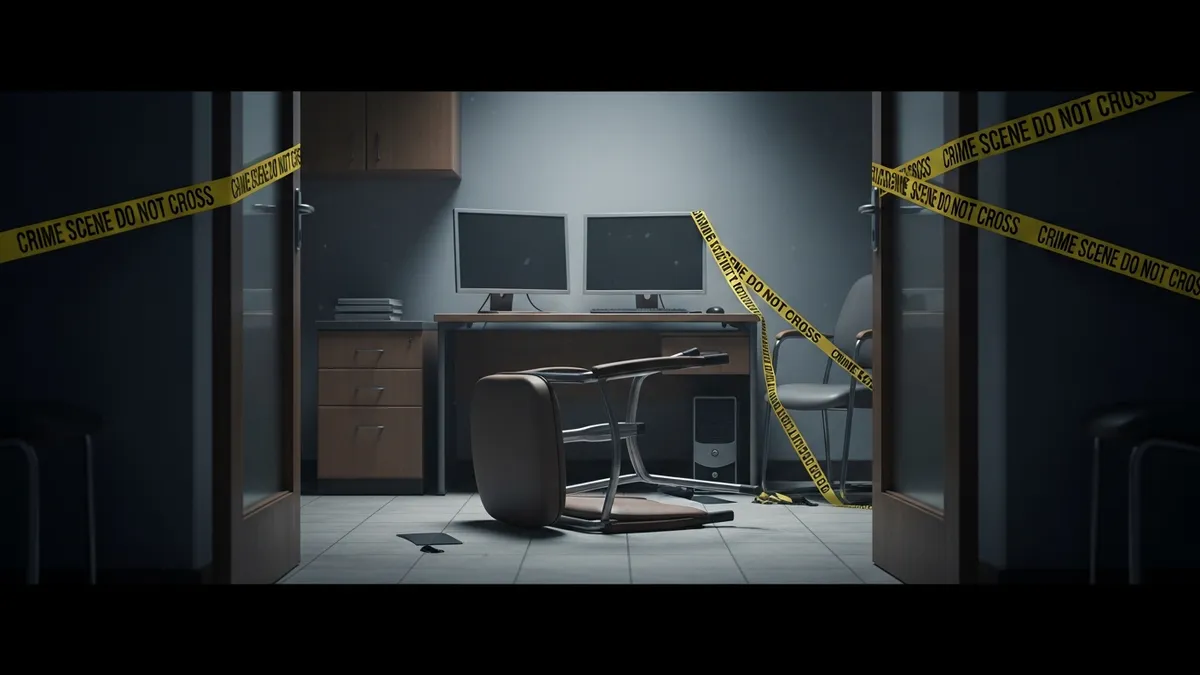
Healthcare data breaches are the most expensive in any industry. According to IBM's 2025 Cost of a Data Breach Report, the average cost of a data breach in healthcare is $7.42 million. The healthcare industry has topped every other sector for 14 consecutive years — and the gap is widening.
That average data breach cost represents large healthcare organizations and hospitals. If you run a small practice, your breach won't cost millions. But it doesn't need to. A breach affecting 2,000 patient records can cost a small practice $500,000 to $750,000 — enough to force permanent closure.
Here's what those costs actually look like, broken down into the bills you'll pay, the damage you can't invoice, and the tail that keeps growing for years.
Forensic investigation is the first major expense. Before you can fix anything, you need to understand what happened — how attackers got in, what systems they accessed, what sensitive data was exfiltrated, and whether they planted backdoors for re-entry. Forensic investigations averaged roughly $41,000 to $90,000 in recent years, with major network intrusions running into the hundreds of thousands, per BakerHostetler's Data Security Incident Response Report. For a ransomware attack with potential data exfiltration, expect the higher end.
Breach notification is legally required under HIPAA's Breach Notification Rule. You must notify every affected patient individually — by mail, not email. For breaches affecting 500 or more people, you must also notify HHS and prominent media outlets in your state. Printing, postage, call center setup for patient inquiries, and dedicated staff time add up fast — large notification projects routinely run into six figures.
Offering credit monitoring and identity protection is standard practice. Most organizations offer 12 to 24 months of identity protection services to affected patients. At typical retail rates of $10-$25 per person per year, a 2,000-record breach runs $20,000-$100,000 in monitoring alone.
Legal fees start the day you discover the breach. You'll need a healthcare breach attorney, possibly class-action defense counsel, and regulatory specialists for OCR interactions. Healthcare breach litigation routinely runs $200,000-$500,000. If patients file individual lawsuits — increasingly common when medical records are involved — costs climb further.
Fines from the Office for Civil Rights are where small practices face their most disproportionate exposure. HIPAA's penalty tiers range from $145 to $2.19 million per violation. "Per violation" means per record, per rule violated. A single breach can generate thousands of individual violations across multiple HIPAA rules.
Recent OCR enforcement against small practices:
OCR doesn't scale penalties to practice size. A 5-provider clinic faces the same penalty framework as a 500-bed hospital.
Downtime is where the real financial bleeding begins. IBM found the average breach in healthcare takes 287 days to identify and contain. That's nearly 10 months of operating under compromised conditions — often without knowing it. During active remediation after discovery, systems may be offline for days to weeks.
Healthcare downtime costs an average of $7,900 per hour, a figure that includes hospitals. For a small practice, a two-week remediation period with partial system access costs $60,000-$120,000 in lost revenue, canceled appointments, idle staff, and overtime to catch up. For practices dependent on digital imaging or electronic prescribing, partial operations may not be possible at all.
Patient loss follows every publicized breach. Survey after survey finds a large share of patients say they would avoid or leave a provider that exposed their data. Some leave immediately. Others stop referring friends and family.
Patient acquisition costs $200-$400 per new patient — but that understates the real loss. A patient who has been with your practice for 10 years represents $30,000-$50,000 in lifetime revenue. Losing 50 established patients costs far more than replacing them with new ones.
Reputation damage is permanent and searchable. Breaches affecting 500+ records are posted on the HHS Breach Portal — publicly called the "Wall of Shame." That listing stays visible for years and appears in Google results when patients search your practice name.
Prospective patients find it. Referring physicians find it. Insurance credentialing committees find it.
Staff impact ripples through your practice. IT staff may leave due to blame or burnout. Clinical staff lose confidence in practice leadership. Front desk staff field angry patient calls for months. Recruiting replacements costs $4,000-$7,000 per employee. The institutional knowledge lost is harder to quantify and impossible to replace quickly.
Insurance premiums spike after a breach. Cyber liability renewals often increase 25-100% after a claim. Some insurers drop healthcare clients entirely after a significant incident. That forces you into a hardened market at much higher rates — if you can find coverage at all.
Corrective action plans imposed by OCR can run for years. These plans require regular progress reporting, external audits, documented improvements, and ongoing compliance monitoring — all at your expense. A three-year corrective action plan with quarterly reporting and annual external audits easily adds $50,000-$150,000 to your total breach cost.
Class-action settlements in healthcare breaches regularly exceed $1 million. Individual lawsuits from patients whose identity was stolen or whose sensitive medical information was exposed can continue for 3-5 years. Legal defense alone — even if you win — costs six figures.
Compliance remediation after a breach requires significant investment. Post-breach, OCR expects to see new security tools, updated policies, additional training programs, and infrastructure upgrades. These commonly run $100,000-$500,000 for small to mid-size practices — money you should have spent on prevention in the first place.
This one doesn't show up on any invoice but may be the costliest consequence. A breach ties your own name to "data leak" and "HIPAA violation" in search results, even if you change practices. The clinical reputation you spent a career building and your data security reputation are now the same thing.
A medical assistant clicks a phishing email on Tuesday morning. Attackers access your EHR and download 2,000 patient records over the next 72 hours before your monitoring — if you have any — catches it. Here's your bill:
Total: approximately $625,000.
That's a practice with 5 providers, 15 staff, and $2.5 million in annual revenue. The breach cost represents 25% of a full year's revenue — before accounting for increased insurance premiums, ongoing legal costs, and the corrective action plan.
What makes this worse: many small practices carry no cyber policy at all — or discover their coverage is thinner than they assumed. Without a policy, every dollar comes from your operating budget — or your personal assets if the practice can't absorb the cost.
The IBM figure — 287 days average to identify and contain a breach — deserves its own discussion because it's the single biggest factor in breach cost.
Every day an attacker spends inside your network increases the damage. They access more records. They exfiltrate more data. They map more systems for ransomware deployment. They plant more backdoors. A breach caught in weeks costs dramatically less than one caught in months — IBM puts the savings at over $1 million.
Small practices using break-fix IT or managing their own systems often don't detect breaches at all. They learn about them from patients who discover fraud, from law enforcement, or from the attackers themselves when ransomware detonates. By then, the damage is done.
This is where 24/7 security monitoring changes the math entirely. Managed detection and response (MDR) catches unauthorized access patterns, unusual data transfers, and credential abuse in hours — not months. AI-powered XDR endpoint protection detects ransomware behavior before encryption starts. The difference between "we caught the attacker on day 2" and "we found out on day 287" is the difference between a $50,000 incident and a $625,000 catastrophe.
Cyber liability insurance has become essential for medical practices — but it's not a substitute for security, and getting coverage isn't automatic.
What cyber insurance typically covers:
What it doesn't cover:
What insurers require before issuing a policy:
If you can't demonstrate these controls, you'll be denied coverage or face premiums that make the policy impractical. A vCISO helps you meet these requirements systematically — and practices that can document these controls qualify for coverage more easily and pay materially lower premiums.
Comprehensive managed IT with security for a 10-person practice costs $18,000-$36,000 per year. That includes 24/7 monitoring, endpoint protection, email security, staff training, backup management, patch management, and HIPAA compliance support.
Compare that to the $625,000 breach scenario. Prevention costs 3-6% of what a single breach costs. And that managed IT investment also gives you better uptime, faster support, compliance documentation, and access to AI tools that improve practice efficiency. You'd want those benefits even if breaches didn't exist.
Here's the comparison at different practice sizes:
At every size, prevention costs less than 10% of breach costs. The return on investment is hard to argue with.
Practices that stay off the Wall of Shame share common habits:
None of these practices have larger budgets than their breached peers. They have better priorities. They invest in prevention rather than hoping they're too small to notice.
Ready to take the next step? Explore our healthcare IT services, book a free consultation, or compare our plans.


Managed IT, cybersecurity, HIPAA compliance, and AI automation for healthcare practices. We keep your technology secure so you can focus on patient care.

4MEDNET.COM - Copyright 2026. All rights reserved.