Cybersecurity: 24/7/365

Cybersecurity: 24/7/365
4MEDNET delivers managed IT, cybersecurity, HIPAA compliance, and AI automation solutions built exclusively for healthcare practices.



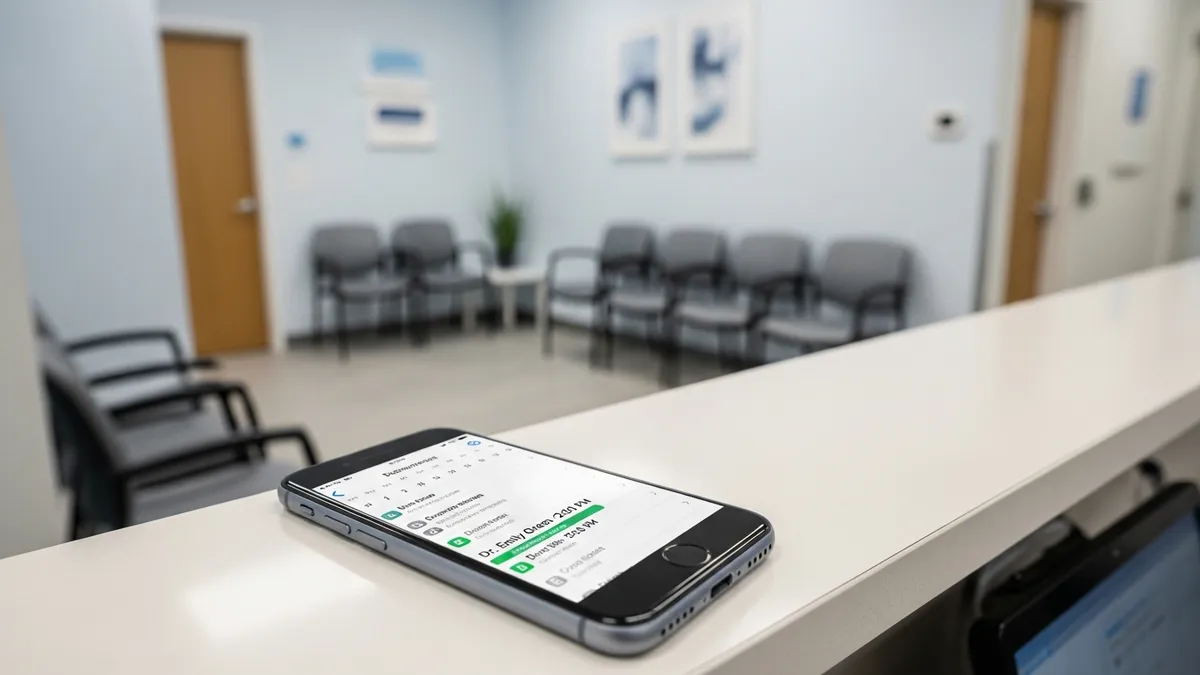
A patient misses their Tuesday afternoon appointment. No call, no cancellation — just an empty slot. Multiply that by 10 to 15 times a week, and your practice is losing $150,000 or more every year to no-shows. Across US healthcare, missed appointments cost an estimated $150 billion annually.
The top reason patients miss appointments is simple: they forgot. Research shows forgetfulness accounts for 44% of all no-shows. That means nearly half your missed revenue is preventable with the right reminder system. AI-powered phone and messaging systems can reduce no-show rates by 25% to 40% — and they do a lot more than just send reminders.
The average no-show rate across medical practices ranges from 5% to 30%, depending on specialty and patient population. Primary care averages about 19%. Pediatrics runs closer to 30%. Sleep clinics top the list at 39%.
Related: see how AI appointment scheduling works and how AI saves your front desk 20 hours a week.
Each missed appointment costs your practice roughly $200 in lost revenue. For a five-provider practice seeing 100 patients per day with a 15% no-show rate, that adds up to 15 empty slots daily — $750,000 per year in lost revenue. No-shows also create a 14% average reduction in daily revenue across medical groups, and the ripple effects go further: wasted staff time, disrupted schedules, and patients who fall behind on care.
The financial impact alone makes no-show reduction one of the highest-ROI investments a practice can make. But it also affects patient outcomes. Patients who miss preventive visits and follow-ups end up sicker, more expensive to treat, and harder to manage.
Before you can fix no-shows, you need to understand why they happen. Peer-reviewed research identifies five main causes:
A traditional front-desk reminder call the day before catches some of these — but your staff doesn't have time to call every patient, follow up with those who don't answer, and handle rescheduling. That's where AI changes the equation.
Modern AI phone systems go far beyond automated robocalls. Here's what the current generation can handle:
AI systems send reminders through the channel each patient prefers — text, voice call, or email — in an intelligent sequence. A typical cadence might be an email one week before, a text three days before, and a voice call the morning of. The system tracks which channels get responses and adjusts automatically.
The numbers support this approach: 90% of text messages are opened within three minutes of delivery. Two-way SMS reminders reduce no-shows 23% more than one-way messages. And a multi-channel approach (text plus email plus calls) shows 28% greater reduction than any single channel alone.
Patients don't just receive reminders — they respond. Reply "C" to confirm. Reply "R" to reschedule. Or call back and speak naturally to an AI assistant that understands context: "I need to move my Thursday appointment to next week." The AI checks availability, offers options, and updates your EHR — no staff involvement required.
This two-way capability is the key differentiator. When patients can reschedule easily instead of just ignoring the appointment, your open slots get filled instead of wasted.
When a patient cancels, the AI instantly texts everyone on the waitlist for that provider and appointment type. First to confirm gets the slot. The EHR updates automatically. One practice reported 35x ROI from backfilling alone — turning last-minute cancellations into revenue instead of dead time.
Calls that come in after hours don't go to voicemail anymore. The AI answers, identifies urgent keywords (chest pain, severe bleeding, difficulty breathing), and routes true emergencies to on-call staff. Non-urgent requests — appointment bookings, prescription refill inquiries, billing questions — get handled automatically or queued for morning follow-up.
Nearly 30 million Americans have limited English proficiency. AI phone systems detect the caller's language in real time and switch automatically — supporting 30+ languages without needing bilingual staff on every shift. Practices using multilingual AI report 60% fewer communication errors and 35% higher patient satisfaction scores.
A systematic review of 29 studies published in the American Journal of Medicine found that patient reminders reduced no-shows by an average of 34%. That's the baseline with standard automated reminders. When you add two-way conversational AI, multi-channel delivery, intelligent cadence, and automated waitlist backfill, the reduction reaches 25% to 40%.
Here's what that looks like for a five-provider practice:
Most practices see payback within one to three months. The ROI ranges from 4,000% to 10,000% depending on practice size and baseline no-show rate.
Reminders that go out by SMS carry their own rules on consent and content — our guide to texting patients under HIPAA covers what a reminder may say and when TCPA applies.
No-show reduction is the headline, but AI phone systems handle much more of the daily call volume that buries your front desk:
Patient intake. The AI collects demographics, insurance information, medication lists, and reason for visit — by phone or text — before the appointment. Data flows directly into your EHR. No more clipboard paperwork in the waiting room.
Insurance verification. Real-time eligibility checks with payer portals confirm coverage, copays, and plan limitations. What used to take staff 15 minutes per patient drops to under two minutes with 95% accuracy.
Prescription refills. Patients call to request refills. The AI collects medication details, checks refill eligibility, routes controlled substance requests to the provider, and notifies the pharmacy. About 70% of routine refills get handled without staff involvement.
Call routing and triage. The AI categorizes every incoming call, transcribes voicemails, identifies revenue opportunities (new patient inquiries, referral requests), and routes calls to the right person. No calls get lost. No opportunities get missed.
The AI phone market for healthcare has grown rapidly. Here's what to look for:
Pricing for small practices typically runs $200 to $600 per month, depending on features and provider count. Some platforms charge per clinician; others charge a flat rate. Implementation takes six to twelve weeks, including EHR integration, configuration, and staff training.
Any system that handles patient appointment data, phone numbers, and health information must meet HIPAA requirements. Before you sign with any vendor:
Your cyber insurance policy may also have requirements about third-party vendors that access PHI. Review your policy before adding new systems.
Implementation follows a straightforward path:
AI phone systems work best when they're part of a well-managed IT environment. Here's how we support the full picture:
AI & Automation: We help you evaluate, deploy, and integrate AI communication platforms with your existing EHR and phone systems. We handle the technical setup so your staff focuses on patients, not configuration. Our AI automation services cover scheduling, intake, billing, and patient communication.
Managed IT: AI phone systems need reliable network infrastructure, secure integrations, and ongoing monitoring. We make sure your EHR and cloud services stay connected and performant so your AI tools don't drop calls or lose data.
Cybersecurity: Every new vendor that touches PHI expands your attack surface. We vet vendors for security, manage your security risks, and ensure your infrastructure meets both HIPAA and cyber insurance requirements.
HIPAA Compliance: We manage BAA tracking, vendor risk assessments, and the documentation that proves your AI tools are compliant. See our pricing plans for details.
Schedule a free consultation to find out how much your practice is losing to no-shows — and how AI can recover it.
Ready to take the next step? Explore our healthcare IT services, book a free consultation, or compare our plans.


Managed IT, cybersecurity, HIPAA compliance, and AI automation for healthcare practices. We keep your technology secure so you can focus on patient care.

4MEDNET.COM - Copyright 2026. All rights reserved.